Saturday, May 12, 2007

Do you go to Podcast U?

Top tier-colleges offer courses to the masses
Saturday, May 12, 2007
Image courtesy of northjersey.com. Photographer: Pete Monsees. Headphones belong to Evelyn Shih.
By EVELYN SHIH
STAFF WRITER

Ever want to attend a world-class university like Stanford or Harvard but don't have the time, opportunity or grades? Now, thanks to the magic of podcasts, all you need is a portable audio player and an Internet connection to enjoy the growing body of online lecture courses provided for free by top colleges.

As the podcast snowball continues rolling – podcast users accounted for 12 percent of the Net's population in 2006 – universities are beginning to jump on the bandwagon. Now, everyday folks around the world can listen to lectures like "Geography of World Cultures," "The Historical Jesus" or "European Civilization From the Renaissance to the Present" during a jog or a long commute.

Photo courtesy of bn.com.
Top-tier schools, including Stanford University and University of California, Berkeley, offer many of their undergraduate courses online, while some Ivy League institutions, such as Columbia, Yale and Princeton, allow you to sample speeches, workshops and seminars by the likes of Treasury Secretary Henry Paulson, former Gov. Christine Todd Whitman and author Steven Levitt ("Freakonomics").

You may not be able to earn a degree, but you will be able to explore a new area of interest, freshen up your high school French or just impress someone at your next dinner party.

Berkeley's eventual goal, said Adam Hochman, project manager of the university's Webcast site, is to make nearly all lecture classes with more than 50 students into free podcasts. But providing such a wealth of information to the public requires a certain vision and generosity on the part of the university and individual faculty.

Thousands of hours

Berkeley has 2,200 hours of course lecture content available on its yearling iTunes U Web site.

Image courtesy of itunes.berkeley.edu.
To create this content, 82 professors agreed to pin on microphones during lectures for an entire semester. Hochman's team, including Berkeley students, screened each audio or video file for quality issues and copyright infringements, blurring whatever Berkeley did not have rights to release.

But some institutions are more wary of sharing too much. At Rutgers University, for example, a handful of professors do use podcasts and other multimedia content to teach, but they limit the use of these materials to registered students.

"The problem with courses is that [the university] can't always make [the contents] public," said Charles Hedrick, director of Internet Research and Technology at Rutgers, noting that lectures are the intellectual property of the professors who give them. "They don't have the rights to do it."

Becoming acclimated
Image courtesy of chat.andover.edu.
Rutgers is not alone in its trepidation. Yale and Princeton have released only lectures that were open to the public, shying away from posting full-length courses.

Still, the caliber of speakers at these institutions has drawn a broad and avid audience of listeners.

After Princeton launched its podcast site in January (uc.princeton.edu/main), the school's podcast ranked 25th among all of iTunes' selections and fourth in its education category – a warm reception for relatively wonky and unsexy material.

Most universities are still working out how they want to use podcasting as a teaching tool and whom they want to ultimately include in their virtual classrooms.

Image courtesy of www.home.unix-ag.org.
A certain amount of momentum-building is necessary, according to Hochman. Faculty need to become more comfortable with the multimedia teaching platform and with the idea that they may be broadcasting across the globe.

"A lot of faculty [understand] that publishing their content on the Internet is a great service for the public," he said.

He should know: Over the past year, Hochman has received letters of thanks from around the world, including one from a Mormon carpenter, another from a physics department of a Russian university and a missive from a U.S. Navy sailor deployed in Iraq.

"Your lectures have been a lifeline for me," the seaman wrote.

E-mail: shih@northjersey.com

Copyright © 2007 North Jersey Media Group Inc.

Wednesday, May 9, 2007

Betty: Still Goin' Strong

Lentil-corn pilaf
Wednesday, May 9, 2007

Vegetarian recipes from recently released cookbooks:
"Cookbook for Women: The Complete Guide to Women's Health and Wellness at Every Stage of Life" by the Betty Crocker editors and Dr. Rita F. Redberg (Wiley, 2007).

Consider Betty Crocker's new "Cookbook for Women" a primer to women's nutritional health, threaded together by trademark recipes. Color-coded nutrients dance across the top of each recipe, accompanying the full nutrition facts in fine print at the bottom -- a useful feature for vegetarians who are counting their vitamins. Although it isn't vegetarian, the book reminds all cooks to "include more meatless meals, at least once a week, as part of your wellness plan."

-- Evelyn Shih
* * *

Lentil-corn pilaf

* 2 cups water
* 1 cup dried lentils, sorted, rinsed
* ½ cup chopped red bell pepper
* 1 cup frozen (thawed) or canned (drained) kernel corn
* 2 tablespoons chopped fresh cilantro or parsley
* ½ teaspoon chili powder
* ½ teaspoon salt

In a 2-quart saucepan, heat water to boiling. Stir in lentils and bell pepper; reduce heat. Cover and simmer 15 to 20 minutes or until lentils are tender. Drain if necessary.

Stir in remaining ingredients. Cook over low heat 2 to 3 minutes, stirring occasionally, until corn is tender and hot.

Servings: 4.

Copyright © 2007 North Jersey Media Group Inc.

An-cay Ou-yay Ead-ray?

Aayy! Fonzie is an author
Wednesday, May 9, 2007

By EVELYN SHIH
STAFF WRITER

Henry Winkler co-writes a children's series on dyslexia.
Who was cool, had a special way with the ladies (and jukeboxes) and wore a leather jacket that wound up in the Smithsonian?

Correctamundo: "The Fonz."

This Friday, Henry Winkler, the man who made Arthur Fonzarelli famous, will come to the Book, Bytes and Beyond bookstore in Glen Rock to let fans look at the most recent chapter in his entertainment career: children's-book author.

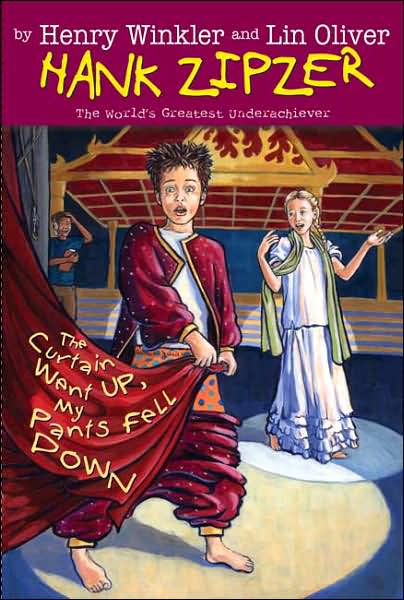
While Winkler has had many successes since "Happy Days," including turns as producer and director, he has also managed to co-write a children's-book series called "Hank Zipzer: The World's Greatest Underachiever." Hank, a bright boy who happens to have dyslexia, is Winkler's fourth-grade alter ego. The actor has become an advocate for broader understanding of learning disabilities after finding out that he was an undiagnosed dyslexic at age 31.

The newest book is "The Curtain Went Up, My Pants Fell Down," where Hank tries out for a school play despite the challenge of memorizing lines. We spoke with Winkler about his book and what it's like to be an actor who has trouble with the written word.

Q. The newest Hank Zipzer book is about a school play. Hank compensates for his dyslexia by working extra hard on memorizing the lines and improvising when necessary. Is that how you work as an actor?

I always had to work a little harder on the scripts because reading is so difficult for me. When I would audition, I would memorize as much as I could, as quickly as I could, and improvise the rest ... and then hope for the best.

Q. You were admitted to Yale School of Drama on the basis of an audition. Was there improvisation involved in that audition, and in the many that followed?

When I auditioned for Yale, I had to do a monologue from Shakespeare. During the middle of it, my brain went south, and Shakespeare got lost. I had the audacity to improvise Shakespeare.

Q. Did you have any children's books that inspired you, either as a child or as an author?

As a child, I read very little. Even now as an adult, reading is difficult. However, I love thrillers -- somehow I'm able to concentrate and read thrillers. Daniel Silva, Lee Child, Lisa Gardner are some of my favorites. Oh! I forgot Stephen Hunter.

Q. What is a moment from the new book that you find especially funny?

Hank's first meeting with the very tall Heather Payne in the hallway. And Hank's reaction to feeling a breeze blow across his knees as he realizes that his pants have just fallen down in front of the audience.

Q. Do you have any upcoming projects besides continuing with the Hank Zipzer series that you'd like to tell us about?

At the moment, all my projects are pending, so what does that mean? My life is on hold as Hank marches forward. Right after I finish answering these questions, I'm going to Lin Oliver's office, where we are writing the 13th novel in the series.

E-mail: shih@northjersey.com

Copyright © 2007 North Jersey Media Group Inc.

Monday, May 7, 2007

Reluctant and Fundamental

9/11 alters immigrant's dream
Sunday, May 6, 2007
Image courtesy of bn.com.
By EVELYN SHIH
STAFF WRITER

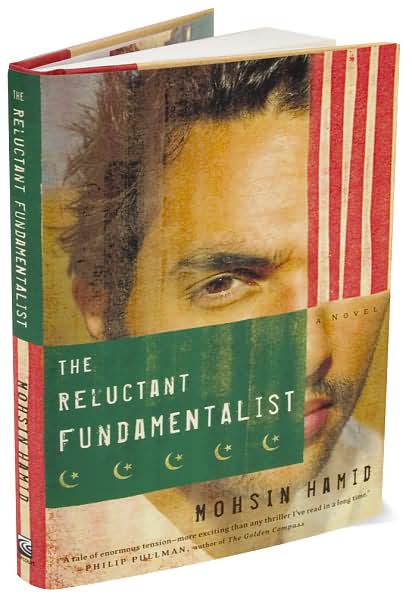
Mohsin Hamid's sophomore effort is both an immigrant's success story and the story of September 11. But at the beginning of the book, the immigrant narrative has already ended: The protagonist has returned to his home country, a lapsed emigre, and is relating his tale to a dodgy American tourist in Lahore, Pakistan.

Yet his story within this frame is one of the American dream. Changez rises from relative rags -- his family fortune has fallen from past glory -- to be at the top of the world. He is a Princeton graduate and the most talented fledgling analyst in a selective Manhattan valuation firm, Underwood Samson.

It's his job to tell companies how to "cut the fat." One of Changez's tasks is to evaluate a firm in New Jersey and file a report, possibly firing many employees his father's age. When he expresses discomfort with the idea of judging and showing disrespect to elders, acts counter to his moral education, his friend advises him to "focus on the fundamentals."

Businessmen focusing. Image courtesy of dancepro.co.jp
That phrase, Underwood Samson's ruthless mantra, becomes problematic in the wake of that fateful day when the Manhattan skyline was changed forever -- as was Changez's personal life.

Returning from a business trip to the Philippines after the terrorist attacks, Changez finds that he is no longer "the middle of the color spectrum" in the subway. Instead, he's an instantly feared foreigner. His new secondary citizen status makes him wonder: Are his fundamentals the laws of business that he has learned to wield par excellence; or are they the tenets of Islam and Pakistani culture that he was taught from childhood to revere?

As both his conviction in the American capitalist dream and his passionate love affair unravel, Changez confronts his inner impulse to side with the Third World and reject U.S. imperialism.

Memoirs and novels from the Muslim perspective are hot commodities, and Hamid's novel is the cream of this crop: compelling and meticulously well-written, if not entirely subtle about its message.

Changez is a unique character for standing at the window of opportunity on both sides of the glass, a have-not living among the haves. But what is his ultimate destiny? His decisions, and the ultimate decision of his American guest, are a human drama that will affect the reader no matter which side he or she is on.


Copyright © 2007 North Jersey Media Group Inc.
Sunday, May 6, 2007

Oh, Mother~Oh, Father~ Don't Abandon Me

Making Tenafly students more aware
Sunday, May 6, 2007
Photo courtesy of Northjersey.com.
*Click here for web version and link to VIDEO*

By EVELYN SHIH
STAFF WRITER


The morning assembly was wearing on in the Tenafly High School auditorium. Feet fidgeted in the back rows and notebook doodles were fast becoming elaborate as the boredom stretched on.

But when Tracie Luck walked onstage, the feet and pencils stilled. And when she opened her mouth, you could have heard a pin drop -- but you wouldn't have, because everyone in the room could hear only the aria spilling from her lips.

Thomas Satterwhite Noble’s 1867 painting, "Margaret Garner." Image courtesy of playbillarts.com.
Luck plays the lead character in "Margaret Garner," a new opera based on the historical story of an escaped slave who kills her children to save them from a life of slavery, a tale that also inspired Nobel laureate Toni Morrison's "Beloved."

Luck's performance is part of the New York City Opera's 2007 "Year of Margaret Garner" tour, which is bringing opera and historical experts to educational institutions and other public venues across the region. It is also a sign of a growing trend: artists taking on the roles of cultural ambassadors on thorny issues such as race, ethnicity and religion.

"I think [the students] may have read about [slavery]," said Susan Tall, the Tenafly music teacher who coordinated the event. "But music and art can bring it to them in an emotional and dramatic way that will be much stronger."

Moving hearts, minds

From the classically trained to the self-taught, a small clutch of artists locally and internationally are starting to use their various media to try to move the hearts as well as minds of children and adults.

Aberdeen resident Dennis Daniels, or "Mr. D" as he's better known, is one of them. His mission is simple: Bring the message of diversity to the school and region in which he teaches. It's his theatrical approach that's different.

Mr. D. Courtesy of mrdandfriends.com.
As school dean, Daniels leads morning assemblies at Hope Academy Charter School in Asbury Park along with his troupe of puppets.

On any given morning, his alter ego could be Zach, a young black man; Old MacDonald, an old white man; Carmen, a Latina diva; or Dan, a "parrot-dodo" who is not very smart and can't fly. It could even be several puppets at once.

It's an act he's honed at schools, libraries and nursing homes, using his crew of puppets to tackle issues such as racial tension, ageism, sexism and prejudice against the mentally handicapped. He often finds himself performing for homogenous groups who have had little contact with diversity.

"We go in, a little United Nations within us," said Daniels, himself African-American. "What I discovered was that children who were not minority would simply begin to see minorities in a different light. ... Kids get the message better from the puppets than when I tell them directly."

The assembly audience at Tenafly High School was not lacking in diversity, but it came from a community with an African-American presence of a mere 1.2 percent, according to the latest census. The chances of most students having a direct ancestor who was affected by the slave trade are slim.

But about half of the high school was in attendance, including the entire junior class and all music students. Many of them had learned about the slave trade in history, and "the very fact that they are coming down to an assembly on it means that it is getting more attention than it would normally," said Tall.

Ryan Arams, a junior who attended the assembly, agreed.

A boring lecture. Note: not actually taken at Tenafly High School. Courtesy of brainbasedbusiness.com
"Some of my friends weren't so happy because [Underground Railroad expert Delores Walters] was going on about the story of Margaret Garner -- and they were falling asleep," Arams said. But the moment Luck began her ear-ringing aria, her friends "were awake," she said.

"Even though the books went into depths about [slavery], I had no physical sense of what was going on," added Arams, who said she is "excited" to see the opera when it comes to New York this fall. "[The presentation] helped it come to life somewhat."

Peace and acceptance
"Shukrillah," by Mohammed Ali aka Aerosol Arabic. Image courtesy of bbc.co.uk.
There are some who have never met a Muslim, and there are internationally conscious graphic artists who have no idea what Islamic art is. British Muslim artist Mohammed Ali brings both those concepts alive for a non-Muslim audience. Like Mr. D and Tracie Luck, Ali boldly goes where no one like him as ever gone before.

As Ali explained at seminars in New York and Chicago recently, Muslim art prohibits the painting of figures, especially ones with eyes. His answer to that precept, after rediscovering his Muslim heritage seven years ago, was to throw himself into what he calls "street calligraphy," his own brand of graffiti-inspired mural and canvas art.

Ali has also become known, within Britain and now in America, for working with local youths on eye-catching Islamic murals that spread the message of peace and acceptance. "Watching someone paint a watercolor just isn't the same, is it?" he said.

Man who claims Sly blew his rafters. Photo courtesy of dworkineliason.com.
"Margaret Garner" composer Richard Danielpour, who was unable to speak to the Tenafly students because of illness, sees the "Year of Margaret Garner" events as a way of paying forward his own transformative experience with music.

"Even though I am not African-American, this is the music I grew up with," said Danielpour. "One of my best musical experiences was when I heard Sly and the Family Stone in 1970s. It blew the roof of my brain off."

And he hopes the music of "Margaret Garner" can do the same for a teenager.

"I believe our young generation ... is our greatest resource in America," he said. "Their awareness -- culturally, aesthetically and spiritually -- will have everything to do with the country we have 20 years from now. For me, this is an investment in our country's future."

E-mail: shih@northjersey.com

Copyright © 2007 North Jersey Media Group Inc.
Friday, May 4, 2007

iPlay iMusic

Kronos keeps pushing the bounds
Friday, May 4, 2007


Photo courtesy of csuchico.edu
By EVELYN SHIH
STAFF WRITER

On Saturday, Kronos Quartet violinist David Harrington will be playing an iPod violin.

What, you may ask, is an iPod violin?

Good question. In fact, Harrington himself doesn't know.

" 'Playing' may not be the right word," Harrington said. "Maybe 'operating' it or 'manipulating' it would be more appropriate."

The Kronos Quartet is combining forces with the artist Trimpin -- who invents new instruments and musical objects for his sculptural exhibits -- for their performance, "4cast: Unpredictable," at Montclair State University. Among other experiments, the quartet will be playing Trimpin's altered instruments, or "toys," and interacting with machines that feed off their sound.

"This is going to be unlike any concert we've done," said Harrington, one of the quartet's founders. "It's the idea that musicians can be inspired by toys, objects or even sounds from the environment."

Trimpin's gallery exhibit of "Phffft." Courtesy of henryart.org
This collaboration will cover unknown territory for the string quartet and the artist. The Kronos Quartet is a champion of new music, having commissioned more than 600 pieces over its 34-year history, but it rarely steps beyond music written for string instruments.

Trimpin, on the other hand, is well-known for manipulating objects and creating sound structures, such as a six-story xylophone or a gamelan of bells suspended by electronic magnets. What he's not known for is working with others.

"A lot of the time, he works by himself with a technician," said Harrington. "All of a sudden, we're his objects."

Members of the quartet, which also includes John Sherba, Hank Dutt and Jeffrey Ziegler, spent time at Trimpin's California studio to try out the "variations on our instruments," as Harrington calls them.

"We ended up asking questions like 'What is a group?' and 'What is music?' " he said. "What are the borders of the musical experience?"

Diagram of new music. Image courtesy of cityofsound.typepad.com.
In some ways, "4cast" is very much like any other Kronos concert: It pushes the envelope and goes bravely where no musical group has gone before. Since its founding in 1973, the quartet has broken the classical music dress code, created new sounds with their instruments, promoted and played previously unheard world music and become a patron of young composers.

"We were struggling to play something that had never been played before," Harrington said.

Recently, Harrington worked with a group of up-and-coming quartets as part of a Carnegie Hall mentorship program, teaching them pieces from the enormous Kronos repertoire. He realized that their struggle was different: They were learning how to play music that had been played before -- but they had never been taught how.

"A lot of times young players have no idea how we do what we do," Harrington said. "There is a body of information that we can help them with, and we've begun to realize that."

Perhaps next year, he'll teach them a tune on the iPod violin.

E-mail: shih@northjersey.com

Copyright © 2007 North Jersey Media Group Inc.

Wednesday, May 2, 2007

Tales of a Jersey Girl O-Yome-San

Kabocha korokke (pumpkin croquettes)
Wednesday, May 2, 2007
Vegetarian recipes from recently released cookbooks:
"Let's Cook Japanese Food!" by Amy Kaneko (Chronicle Books, 2007)

Westfield native Amy Kaneko married a Japanese man -- and married into a cuisine she had never tasted, let alone cooked. After living in Japan and learning the ropes from her in-laws, she presents a book of Japanese home cooking that goes far beyond sushi and tempura. Many recipes that could be vegetarian are presented with meat ingredients, but a handful of veggie selections are available.

-- Evelyn Shih

* Kabocha korokke (pumpkin croquettes)

* ½ kabocha pumpkin, seeds removed and cut into 1- to-2-inch chunks
* 1 tablespoon unsalted butter
* ½ yellow onion, minced
* 2 tablespoons soy sauce
* 2 tablespoons mayonnaise
* Salt, to taste
* ¼ teaspoon ground pepper
* 1 cup all-purpose flour
* 1 large egg, beat until well blended
* 1 to 2 cups panko bread crumbs for frying
* Canola or other neutral-flavored oil for deep-frying
* Tonkatsu sauce for serving (available in specialty stores)

Photo courtesy of att-japan.net.
#In a saucepan, cover the kabocha with water. Place over medium heat, bring to a simmer and cover. Cook until the flesh and skin are soft, 15 to 20 minutes.

While the pumpkin is cooking, in a small frying pan, melt the butter over medium heat. When the butter is foaming, add the onion and cook, stirring often, until translucent, 4 to 5 minutes. Remove from the heat and set aside.

When the pumpkin is ready, drain well. Remove any brown spots on the green skin. Transfer the pumpkin to a large bowl and, using a potato masher or the back of a fork, mash until fairly smooth. Add the onion, soy sauce, mayonnaise, salt and pepper; mix well. Let the mixture cool.

Place the flour, egg and 1 cup of the panko in three separate bowls. Dampen your hands with water and form the pumpkin mixture into about 20 golf-sized balls. One at a time, gently dust the croquettes with flour, shaking off the excess; coat with egg; then coat with panko, lightly pressing the panko into place before setting croquettes on a plate.

Pour the oil to a depth of 3 inches into a deep, wide saucepan and heat to 350 degrees. Working in batches, drop the croquettes into the oil one at a time and fry until medium brown, about 4 minutes. Using tongs or chopsticks, remove the croquettes from the oil and drain on paper towels. Serve hot with tonkatsu sauce.

Servings: 4 to 6 as an appetizer; 2 as main course.

Copyright © 2007 North Jersey Media Group Inc.