Saturday, July 14, 2007

Reconnecting

North Jerseyans’ kids sojourn in the old country
Thursday, July 5, 2007

By EVELYN SHIH
STAFF WRITER

The summer she was 16, everything changed for Joanna Paliouras. Her parents sent her on a trans-Atlantic flight, all by herself, back to the country where they had been born.

"My uncle said maybe you should see more of Greece and learn to love it," said the Closter mother of three. "And that's what happened."

Paliouras' childhood impressions of Greece were slightly terrifying, formed by time spent on her grandmother's farm, where dinner was alive and eating in the back yard just hours before making it to the table. It was only after that transforming summer, traveling across the ancient nation as a young adult and seeing the breadth of cultural heritage it had to offer, that Paliouras had a change of heart.

"It became more of what I wanted," said Paliouras. "As a parent it's what I want for my kids as well."

Joanna and her native Greek husband, Dimitrios, now take their three young sons to Greece yearly. They are one of the many local couples that dedicate time -- and significant plane ticket money -- to a yearly pilgrimage back to their country of origin. Whether the parents are first-generation immigrants, second generation or even further removed, the goal is to pass on a deep-seated love for a tradition and a way of life that complement the American way of life.

Poland-bound

This summer, Kasia Krzoska, 18, will be picking up the baton from her native Polish parents Beata and Leszek. In late July, the Upper Saddle River native will be charting her own trip across Europe, spending a significant amount of time at a village near Krakow, Poland, where her step-grandmother lives.

She will also be acting as tour guide for a daughter of a family friend, a Polish-American girl her own age.

"I'm just excited to show her everything, because she's only been [to Poland] once, when she was much younger," said Kasia, who is now an old hand at travel. At the tender age of 7, she traveled alone under the protection of a stewardess and spent the summer with an aunt she barely knew near Krakow.

Kasia will be the first to tell you that a certain double vision -- seeing American life in one eye and a different life in another -- is a unique side effect of growing up with summers abroad.

"Whenever I would visit Poland I felt like I was almost living a double life," she said of the different social atmosphere. It was not until 10th grade that she came to terms with her layered national identity. "I tried to cut out the attitude that I had in Europe when I was here [in America] and tried to fit in with the mainstream American high school attitude and behavior," she explained. "Now I can tell you it honestly doesn't matter what environment I'm in: I'm proud of my roots."

The stamp of worldliness is difficult to wash off, said Anju Ahuja, a first-generation Indian mother in Closter. "They have realized that life is not a bed of roses," she said of her son, 19, her daughter, 18, and her youngest son, 8, all of whom have gone on annual trips to India. "There's so many people that have nothing, and yet somehow get through the day. ... I think it has to do with who they are, and the kindness and compassion in their hearts.

"And they are more in touch in their culture," she added.

Intangible connection

Summering in the homeland is a way of staying in touch with family members still living in the old country, but it's also a way of showing the next generation a different worldview that informs their parents' lives. While language skills may vary -- Kasia speaks Polish more fluently than her younger brothers, says mother Beata Krzoska -- it's the intangible feeling of connection to a place that is most precious.

"The first few days when I go to Poland, it feels strange to me," admits Kasia. "At first I miss the U.S. a little bit, and then at the end I don't want to come back. ... I'm looking forward to going back to Poland and having that feeling of ... feeling at home."

Meanwhile, the Paliourases labor on, hoping to foster a similar love for Greece in their young sons Pantelis, 8, Alexandros, 4, and Aristotelis, 18 months. The older boys attend Greek language school twice a week, and the whole family participates in Greek gatherings and festivals in their North Jersey community.

But without a doubt, the trips to Greece do the most to reconnect their children with family and culture, said Joanna Paliouras. Those summer stays began when the boys were mere infants. In Greece, they eat their fill of souvlaki and feta, dance at impromptu family gatherings and celebrate their saints' name days. And of course they speak fluent Greek with their cousins.

By bringing them to Greece early in their lives, Joanna Paliouras hopes to spare them the sudden culture shock she experienced at age 8, during the first trip to Greece she can remember.

"My grandparents were used to going out in the back, grabbing a chicken and killing it for a meal," she said. To this day, she cannot bring herself to eat lamb from the spit at Greek festivals.

E-mail: shih@northjersey.com

Copyright © 2007 North Jersey Media Group Inc.

Gad-zuchs!

Zucchini cheese squares
Tuesday, July 3, 2007

Vegetarian recipes from recently released cookbooks:

"Serving Up the Harvest: Celebrating the Goodness of Fresh Vegetables," by Andrea Chesman (Storey Publishing, 2007)

Andrea Chesman calls herself a "cook who gardens" in a cookbook that exudes enthusiasm for both pursuits. Although Chesman doesn't turn her nose up at those who choose to buy from farmers' markets instead of planting their own produce, she includes cultivation tips for every vegetable featured. (Vegetables have their own chapters and are organized roughly into five harvest seasons.) She also includes a "math" list converting the unprepared vegetable into the standardized measures used in recipes and timing notes for how each vegetable responds to different cooking methods. The recipes themselves are fairly simple -- the book cover advertises "175 simple recipes" -- and are aimed at bringing out the best flavors of specific vegetables.

-- Evelyn Shih
* * *

Zucchini cheese squares

* 3 cups grated zucchini
* 2 teaspoons salt
* Butter for greasing baking dish
* 1½ cups unbleached all-purpose flour
* 1 tablespoon baking powder
* 1 onion, diced
* 2 cups grated cheddar cheese
* 2 teaspoons fresh thyme leaves
* 1 teaspoon freshly ground black pepper or lemon pepper
* ½ cup canola oil
* 3 large eggs, beaten

Combine the zucchini and salt in a colander and toss to mix. Set aside to drain for 30 minutes. Squeeze out the excess water.

Meanwhile, preheat the oven to 350 degrees and grease a 7-by-11-inch baking dish with butter. Stir together the flour and baking powder in a medium bowl. Add the onion, zucchini, cheese, thyme and pepper. Mix well with a fork.

Whisk together the oil and eggs in a small bowl. Pour into the zucchini mixture and mix well. Spread evenly in the baking dish.

Bake for about 35 minutes, until golden. Let cool on a wire rack for 5 minutes. Cut into squares and serve warm or at room temperature.

Servings: 6 to 8.

Copyright © 2007 North Jersey Media Group Inc.

Woman Sells Book; Book Sells You

Your 15 minutes of fame await
Tuesday, July 3, 2007

By EVELYN SHIH
STAFF WRITER

I gave Marta Tracy [pictured left] my name and number without thinking.

"You see what I just did?" she asked after taking it down.

My information is now indelibly inscribed in Tracy's Rolodex of contacts, rubbing shoulders with the likes of Food Network host Paula Deen, fashion designer Isaac Mizrahi and "The View" host Elisabeth Hasselbeck.

A television producer responsible for launching the Style network as well as helping to create E! Entertainment Television, Tracy has been putting people on TV for more than 30 years. She treats every phone number like a keeper -- and so should you.

Networking one name at a time is only one of the many insider tips she lays bare in her book, "Starring You!" which arrives in bookstores this week.

"People kept coming to me and getting advice from me about getting onto television," said the Old Tappan resident. "I'd see them on TV a few months later."

Now you, too, can get the Tracy treatment. "Starring You!" is a step-by-step guide to getting booked on TV shows, something that almost everyone should do, according to Tracy and co-writer Terence Noonan, a co-producer on "The Morning Show With Mike and Juliet."

"I think that television is still the most powerful medium for getting your message out," said Tracy, claiming that the Internet has yet to outdo the tube in terms of mass influence. Whether you actually want to become a TV personality or you want to "launch your brand, your business and your life," as Tracy is fond of repeating, the glowing box is the way to go.

Tracy herself was a convert to television. At Boston College, she studied education but eventually "just felt that the box was a little bit small for me."

"Sophomore year, I happened to pass a sign in the basement of the education building that said 'TV 101,' " she recalled. "I just had an aha! moment -- gosh that sounds so exciting, that's what I want to do!"

The problem was, Tracy discovered, she had no contacts in an industry where who you know is everything -- hence, her now fanatic dedication to the expansion of her Rolodex. As a fresh college grad, she spent three years pounding the pavement before a tenuous tie got her in the door at the children's show "Captain Kangaroo." By the time she was in her late 20s, Tracy was working at HBO with a then-fresh-faced Matt Lauer on entertainment segments.

Nowadays, as the owner of her own company that realizes the dreams of would-be TV guests, Tracy wouldn't trade her career for anything else. What's best, she said, is "the opportunity to be creative, to work with other creative people."

Tracy is working on a show concept that she hopes to bring to fruition soon. "It's actually confidential, but I hope you'll see it on the E! network soon," she said. "It's some of the best work that I've done in my life."

But don't expect to see "The Marta Tracy Show" anytime soon.

"I have never wanted to be in front of the camera," she said. "It was very clear to me when I was in college, working with talents in TV, that I enjoyed helping the talent get on TV and on the screen. But I never considered myself an actress.

"The best role I ever had was to help give [others] confidence," she added.

E-mail: shih@northjersey.com

Copyright © 2007 North Jersey Media Group Inc.

Monday, June 25, 2007

My Favorite Purple Food

Eggplant stuffed with a sesame-peanut masala
Monday, June 25, 2007

Vegetarian recipes from recently released cookbooks:

"5 Spices, 50 Dishes," by Ruta Kahate (Chronicle Books, 2007)

Coriander seeds, cumin seeds, mustard seeds, ground cayenne and ground turmeric are the five relatively commonplace spices featured in this slender book of Indian dishes. Although Ruta Kahate cheats a bit by using green chilies, ginger and garlic as additional flavors, she delivers on her promise to demystify her native food. Most ingredients can be found in a supermarket, and vegetarian offerings may satisfy even meat lovers.

-- Evelyn Shih

* * *

Eggplant stuffed with a sesame-peanut masala

  • ¼ cup brown (natural) sesame seeds
  • ½ cup raw or lightly toasted unsalted peanuts
  • 1/3 cup cilantro leaves, finely chopped
  • 2 tablespoons brown sugar
  • 2 teaspoons salt
  • ¼ cup plus 2 teaspoons water, divided
  • 1 teaspoon finely grated garlic (about 2 large cloves)
  • ½ teaspoon cayenne pepper
  • ½ teaspoon ground turmeric
  • 8 mini Indian eggplants or 6 of the smallest Japanese or Italian eggplants you can find (about 1½ pounds)
  • ¼ cup canola oil

Using a food processor, separately pulse the sesame seeds and peanuts to semi-coarse powders. Remove to a bowl. Add the cilantro, sugar, salt, 2 teaspoons of the water, garlic, cayenne and turmeric to the powdered mixture and mix well. The mixture should become lumpy. Taste and adjust the salt and sugar if needed.

Leaving the stem end intact, make 2 intersecting diagonal cuts on the bottom end of each eggplant. Stuff each "X" with the filling, packing it down well. It will feel awkward, but push in as much filling as the eggplant will take, using your fingers to gently pry open the eggplant.

Heat the oil in a skillet large enough to hold all the eggplants in a single layer. Gently place each eggplant in the pan, and turn the heat to medium. Turn them occasionally so they are evenly browned on all sides. Pour in the remaining water, cover, and cook on low until tender, about 15 minutes. To check doneness, pierce the stems with a small, sharp knife -- it should slide in easily.

Servings: 4 to 6.

Sunday, June 24, 2007

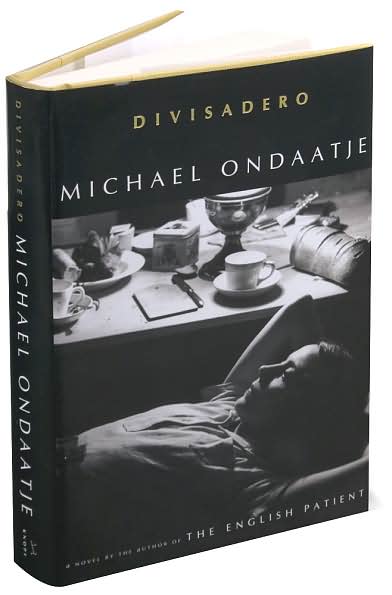
BOOK REVIEW: Divisadero

Novel a collection of stories
Sunday, June 24, 2007

DIVISADERO, by Michael Ondaatje; Alfred A. Knopf, 273 pages, $19.95.

By EVELYN SHIH
STAFF WRITER

If you open Michael Ondaatje's new book expecting one story, you will be disappointed. In fact, the central story line ends at Page 165 with more than 100 pages to go -- leaving you to wonder what happens to the protagonists.

Perhaps Ondaatje, who wrote "The English Patient" and "Anil's Ghost," described the book best. In an early scene, the "woman formerly known as Anna" tells in first person the way she and her adopted sister Claire thought about Cooper, another adoptee that their father treated as a farm hand.

"Who was Coop, really? We never knew what his parents were like. We were never sure what he felt about our family, which had harboured him and handed him another life. ... Everything was collage."

Everything in "Divisadero" certainly feels like collage. The book reads more like a collection of short stories that hover around a knot of characters, painting lives in daubs. Chapters jump between viewpoints, skip years, and sometimes vault several thousand miles.

We're with Coop and Anna as their forbidden sexual relationship develops, and we're there when her father discovers them and rages violently, destroying their assembled four-member family forever. (In retrospect, Anna calls it "something very small, something that might occur within just a square inch or two of a Brueghel. But it set fire to the rest of my life.")

We're in Coop's fast-paced heist story as he becomes a card sharp who can "deal a pack of cards to the Supreme Court and get away with it," and we come back to him later to follow another ruse, where the joke's on him.

We're with Claire as she works meekly in a law office during the week and rides horses on the weekend. We're with Anna in France, years later, as she researches an obscure, dead French poet from his last known residence.

It is the life of this poet, Lucien Segura, in which we are immersed after the sudden end of the first narrative. The only tenuous ties are Anna's obsession with him and the minor presence of the boy Rafael, who would grow to be Anna's middle-aged lover. Can we help but mourn the early loss of our good friends, whom we now know so intimately?

But as the second act continues, spinning out the tale of Lucien with a full cast of characters and perspectives, we realize that it is no loss after all. The power of Ondaatje's (pictured left, courtesy of www2.davidson.edu) book is not to deliver the thrill of a plot line, with exposition, development and full denouement. He does deliver that on the small scale, building to climactic moments in individual segments like a masterful short story writer; but the real payoff is in the totality.

Fall in love, the book seems to say. Fall in love with the little details that make up the characters' lives, no matter if they span half the world and skip a century; and in turn, fall in love with the human life in general. In another beautiful passage, in which Rafael puts together details about his new lover even as she scrounges for scraps about the poet, he wonders:
"Who is she? This woman who has led him into this medicine cabinet of a room where most of her possessions exist. ... As if this orderly collection of things is what she is. So we fall in love with ghosts."


E-mail: shih@northjersey.com

Copyright © 2007 North Jersey Media Group Inc.

Wednesday, June 20, 2007

Greek--But Not So Big and Fat

Cauliflower with tomatoes and feta
Tuesday, June 19, 2007

A NEW LEAF

Vegetarian recipes from recently released cookbooks:

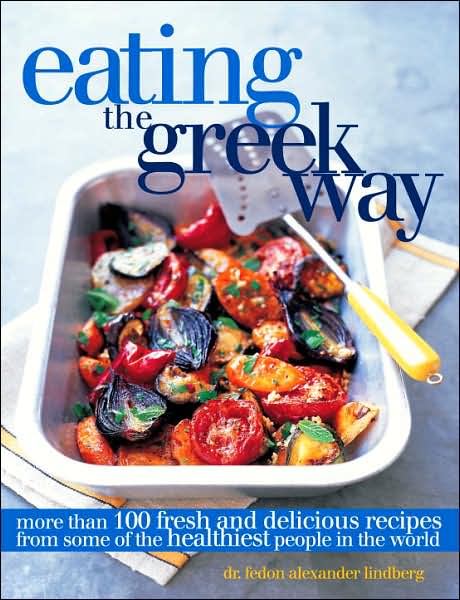
"Eating the Greek Way," by Fedon Alexander Lindberg (Clarkson Potter, 2007)

Eating Greek means eating healthy -- at least, when you're eating with Lindberg. Born and raised in Greece, Lindberg began studying internal medicine and endocrine disorders because he was worried about diabetes in his family. He now owns four clinics in Norway, where he is also well-known as a food writer. Perhaps it's only to be expected that Lindberg's cookbook prefaces the recipes with a hearty 45-page dietary primer. Lindberg explains the nutritional balance in Greek food and parses terms like "glycemic load" (GL) that are listed with each recipe. He teaches you how to measure portions with your palm, plans sample weekly menus, and even suggests how to stock your kitchen. Vegetables and legumes are low in GL -- a positive quality -- and most meals require two palm-sized portions, so vegetarian and vegetable-based recipes are bountiful.

-- Evelyn Shih

# Cauliflower with tomatoes and feta

2 tablespoons clarified butter
1 large onion, sliced
2 garlic cloves, crushed
8 tomatoes, peeled and finely chopped
2 teaspoons dried oregano
Pinch of ground cinnamon
Salt and pepper
1 large head cauliflower, cut into florets
3 tablespoons olive oil
1 tablespoon fresh lemon juice
½ cup crumbled feta cheese

Preheat oven to 375 degrees. Melt the butter in a large skillet over medium heat, add onion and garlic and cook for 3 to 4 minutes. Add the tomatoes, oregano, cinnamon and a little salt and pepper. Stir well, cover and simmer for approximately 5 minutes.

Add the cauliflower florets to the tomato sauce, cover and simmer for 10 to 15 minutes. Transfer to a baking dish and drizzle with olive oil and lemon juice. Top with the feta. Bake until the cauliflower is tender and the cheese has melted, about 40 minutes. Serve hot.

Servings: 4.

Copyright © 2007 North Jersey Media Group Inc.

Got Counseling?

Counselors are school's Mr./Ms. Fix-It
Wednesday, June 20, 2007

By EVELYN SHIH
STAFF WRITER

By now, high school seniors are getting themselves ready for college life. High school is fast becoming a memory. And the school counselors who masterminded the college admissions battle are only too glad to have a huge weight off their shoulders.

But their work is never really done.

"We fix everything here," said Amy Bria, school counselor at Rosa Parks High School in Paterson.

For four years, high school counselors are parents who advise on life and academic decisions without a parent's power to command. They are faculty members who proctor tests and visit classrooms without classrooms of their own. They are, in short, the essential but largely unnoticed cogs in a school's machinery.

And, at least until recently, in much of New Jersey they were more likely to be overlooked as a profession by the very students they nurtured academically. To renew interest in the profession and keep pace with industry changes, the state Department of Education in 2004 dropped a requirement that high school guidance counselors be current or former teachers in the schools in which they work.

"We were losing good people," said Mark McGrath, president of the New Jersey School Counselor Association. Now instead of teachers in the workforce studying to be counselors through night classes, college students with psychology and sociology backgrounds can go to graduate school and expect to start work as counselors straight out of the program, he said.

"There's been a minor spurt [in counselors]," added McGrath, who works in Lawrenceville. Indeed, the number of counselors in New Jersey saw a slight uptick in the past five years, rising to 2,702 during the 2006-07 school years, up from 2,512 in 2001-02 , according to the state Board of Education.

That is good news for North Jersey students, who already enjoy more attention from counselors than many of their peers across the state and nation.

Local high school guidance counselors serve just 220 students each, on average. Compare that with guidance counselors throughout New Jersey and the nation who divide their time among hundreds more students: 386 on average in New Jersey, and 488 nationwide.

The numbers point to a fact of life for high school guidance counselors: You have to learn to juggle and react.
(clip art to left courtesy of scoutbase.co.uk)

Of course, there's consulting on college applications and life after high school, but they also work as liaisons between parents and teachers, update academic records, perform a variety of administrative tasks, and, of course, bond with students. They also take over general faculty duties: Bria, for one, leads the National Honor Society and proctors tests.

But the job can change from hour to hour. During an interview in Bria's office, a teacher approached her with a discipline problem, and she agreed to see a female student who was acting out during lunch.

Added Bill Joosten, who has served as guidance counselor for more than 40 years, most recently at Pascack Valley High School in Hillsdale: "You really can't do a lot of planning with all this stuff going on, because the minute you sit down to do something, someone's at your door and they need help."

E-mail: shih@northjersey.com