Thursday, August 9, 2007

Petite Nation

Little frames with one big demand
Thursday, August 9, 2007
By EVELYN SHIH
STAFF WRITER
Staff photo, left, by Peter Monsees

Shopping for clothes is a cherished North Jersey pastime. But for more than half of all women, it may be a frustrating experience involving ankle pants that graze the heel, inseams that hang between the legs and armholes that need to be pinched an inch.

A full 56 percent of American women are 5-foot-4 or under -- the industry height indicator for petite sizes, said Banana Republic spokeswoman Janelle Wiggins. And the petite market in women's clothing is a huge, untapped market.

"Petites currently has the highest growth rate of all women's clothing categories, including juniors, women's and plus sizes," she said.

What's more, she added, "Banana Republic Petites customers spend twice as much as the average customer, shop more frequently and are extremely loyal."

Maybe they're shelling it out because it's such a relief to find clothes that actually fit -- and are in style at the same time. Season's fashions are a gamble for the petite shopper: The short jacket this fall might prove to be a lucky fashion coincidence that looks great. But are the wide-leg trousers, popular this season at many stores for career women, too much cloth to carry on a small frame?

The answer is no, said Talbots spokeswoman Betsy Thompson. Petite women can pull off a lot of fashions -- even a horizontal line design -- if the clothing manufacturer does its homework.
"[Over the years], petite women got to know the brands that catered to them," said Thompson. Talbots has carried a petite line since 1985 and was one of the earliest brands to do so. It also created a plus-size petite line in 2001.

Talbots makes most of its regular misses styles available in petites and women's petites, and this requires a special balance of art and science.

"You can't just shorten something," said Thompson. "It's not going to fit the body right. The really important word is proportion."

With a jacket, for example, precise measurements must be made not only to shorten sleeves and body length, but to make sure the waist hits at the right spot. Armholes are smaller, as are design details such as lapels and pockets, said Thompson.

If they are not modified, the same pockets can look like "oven mitts on a petite jacket and postage stamps on a women's [plus size] jacket."

Even the print must be taken into consideration. Thompson's rule of thumb: If the repeat of the pattern is larger than the palm of your hand, there's a good chance the dress will be wearing you instead of you wearing the dress.

Banana Republic Petites launched online in 2001 and has an in-store presence at the Westfield Garden State Plaza branch (sister brand Gap introduced petites in 2006 online only). These lines pay attention to details like cuffs, hems, collars, ruffles and bows -- anything that might drown a petite customer in cloth.

"A little goes a long way when you're small," advised Sharon Haver, editor of clothing-advice Web site FocusOnStyle.com. Too much fabric can drag down a tiny frame.

Perhaps the trick to dressing is the same, no matter what size you are.

"Understand your body," said Haver. "Even if you are petite, you still have a generic shape -- hourglass, athletic or long torso, for example ... you have figure assets and figure flaws. Play to your strengths."

Haver suggests finding a tailor to make modifications. As long as jackets fit in the shoulder, they can be changed to fit in other places. A trend of shorter jackets this fall may help many petite women find a fit in regular sizes, she added.

In keeping with the current fashion of women wearing styles close to men's suits, women can shop at boys' suit stores. There, they can take advantage of the tailoring service, which is more common to men's retail than women's.

Pants are particularly difficult to shop for because of differences in the inseam length, the curve of the pant leg and features like flares that need to be proportionate. Juniors or girls' departments might be a good hunting ground for petite women, said Haver.

Petite shoppers are getting more attention from smart clothing brands, yet the wheels are only beginning to turn. Haver encourages petite women to write to their favorite department stores or designers and make noise if they feel the petite selection is insufficient or limited to a small group of unattractive designs.

"There's no reason to fall into a fashion wasteland," she said.

E-mail: shih@northjersey.com
Copyright © 2007 North Jersey Media Group Inc.Copyright


Where to find petite styles Some other North Jersey stores that carry petites:


• Ann Taylor or Ann Taylor Loft: various stores, including Westfield Garden State Plaza.


• Macy's: various stores, including Garden State Plaza and Paramus Mall.


• Lord & Taylor: various stores, including Ridgewood store.


• Coldwater Creek: Garden State Plaza store. Petites mixed in with other sizes.


• JC Penney: various stores, including Palisades Center store.


• Petite Sophisticate: pure petites store at Jersey Gardens, Elizabeth.

Wednesday, August 8, 2007

Veggie Sandwiches

Food: Grilled Gruyere with braised leeks on multigrain bread
Tuesday, July 31, 2007

Vegetarian recipes from recently released cookbooks:

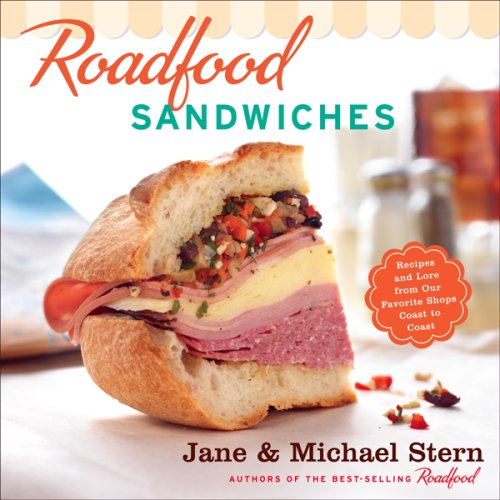
"Roadfood Sandwiches," by Jane and Michael Stern (Houghton Mifflin, 2007)

Most vegetarians may feel that their sandwiches are limited to a handful of non-meat options: soy-meat, egg salad and good old peanut butter and jelly. The Sterns cover those bases in this mostly meat book. But they also include unusual veggie selections, breaking the meat monopoly between the slices.

- Evelyn Shih


Grilled Gruyère with braised leeks on multigrain bread

* 2 medium leeks
* ¼ cup extra-virgin olive oil
* ½ cup water
* Grated zest and juice of ½ lemon
* 1 teaspoon fresh thyme leaves
* Scant ½ teaspoon salt
* Pinch of freshly ground pepper
* Butter and Dijon mustard for spreading
* 8 slices of dense multigrain bread
* 10 ounces of Gruyère cheese

Preheat the oven to 400 degrees. Trim off the root end of the leeks. Slice them lengthwise and remove any tough, dark green portions by cutting away from the root end on an angle and peeling them off. Clean the leeks thoroughly under running water to remove any dirt. Pat dry.

Heat a large skillet and add 2 tablespoons of the olive oil. When the oil is hot, carefully place the leeks in the pan, cut side down. Cook just until they are golden brown on one side. Remove the leeks and arrange them cut side up in a casserole dish. Add the water, lemon juice, and remaining olive oil. Sprinkle the lemon zest, thyme, salt and pepper over the top. Cover tightly with aluminum foil and place in the oven. Bake for 20 to 25 minutes. Remove the foil and bake uncovered for another 20 minutes. The liquid will reduce, and the leeks will caramelize. Let them cool.

Thoroughly butter one side of each slice of bread and arrange the slices butter side down. Divide the cheese evenly among the bread slices. Cut the braised leeks diagonally into 2-inch lengths and arrange them on four of the slices. On each of the other four, spread Dijon mustard over the cheese. Place the slices together to make each sandwich.

Place a batch of the sandwiches in a large skillet over low heat. Cook on both sides until brown and crispy, about 10 minutes per side. Keep warm in the oven while you cook the remaining sandwiches. Cut in half and serve.

Servings: 4 sandwiches.

Copyright © 2007 North Jersey Media Group Inc.

Tuesday, August 7, 2007

BOOK REVIEW: Afterwards

'Afterwards' questions the past
Sunday, August 5, 2007

By EVELYN SHIH
STAFF WRITER

As an opening clause to a sentence, the word "afterwards" implies something has finished. We have only to read the line to see what follows.

Yet coming at the end of a phrase, the word opens the door to judgment. How do we live with the consequences of our actions -- and how will we be interpreted by others? This never-ending revision process, the great big Afterwards, is the central theme of Rachel Seiffert's new novel.

Two British soldiers, one who fought the IRA in the '90s and one a pilot for colonial forces in Kenya during the '50s, grapple with their past participation in now unpopular military actions. The former, Joseph, is the leading man of the romance that drives the narrative arc. David, the latter, is the recently widowed grandfather of the leading lady.

Both find their destinies intertwined with their nation's history of mistakes. Hindsight is twenty-twenty, of course: Everyone agrees in modern-day London that the British should not have colonized and forcibly put down the Mau Mau in Kenya. The violence in Ireland was likewise prolonged and exacerbated by the presence of British soldiers.

Logically, no one can blame the individual soldiers for what occurred in wartime; but for Joseph and David, it is easier to sequester their past selves in silence than to discuss openly what atrocities they may have committed. The self-condemnation that they hide from everyone, including themselves, becomes poisonous -- even explosive -- as the story progresses.

Seiffert structures the plot on a very believable, very charming love story between Joseph and Alice, two lost souls who found each other at a time when neither was looking for a relationship. David enters into a strange triangulation with the young couple when he begins telling stories of his life in Kenya to Joseph instead of Alice. Although his granddaughter is eager to hear him speak of his relationship with his late wife, David finds it easier to relate to her new boyfriend.

Joseph tolerates these cathartic sessions with David, suppressing flashbacks to his own deployment, until one day he simply can't any longer. His self-destructive impulses come to the fore, and everything -- his relationships, his job, his sanity -- is suddenly in jeopardy.

Alice, for her part, knows Joseph and David only in their current state. She belongs to their Afterwards and can only dance along the edges of their turmoil. Seiffert puts her moral questions at the center of the novel as well: Does she need to know everything about those she loves? Where does a need for honesty end, and morbid curiosity begin?

Seiffert's sentences are simple but well-placed, painting a prosaic picture of life going on, day by day, in a subdued tone. She invites the reader to take a ride on the calm lake of these regular people's lives, luring us to the middle of the water just before the brewing trouble suddenly breaks surface.

And she reminds of something that we, as a nation at war, should always remember: that soldiers, too, are human. The war may come and go; but for them, there will be Afterwards.

E-mail: shih@northjersey.com

Copyright © 2007 North Jersey Media Group Inc.

Here Comes the Drama

Troupe in training keeps the Bard short and light
Friday, August 3, 2007

By EVELYN SHIH
STAFF WRITER

The "teaching hospital" of "Grey's Anatomy," Seattle Grace, is a stage for hot young interns to play out all the drama and sex they'll need for the rest of their lives.

The "teaching theater" called the Shakespeare Theater of New Jersey, based in Madison, has hot young actors play out drama onstage with the sexy words of the Bard. These emerging artistes are members of the company's Next Stage Ensemble, and they'll perform "Twelfth Night" outside the Puffin Cultural Forum in Teaneck on Sunday as part of the company's Shakespeare in the Park(ing Lot).

What will they have in common with "Grey's"? Both shows are about an hour in length. Shakespeare's famous "two hours traffic" has been slimmed down to just under 60 minutes, making the play fun for kids -- and perhaps less of an ordeal for adults. [Above: Next Stage Ensemble doing "Love's Labour Lost." Courtesy of njshakespeare.org.]

"It's hard to focus on the darker parts of the play," said Bonnie Monte, artistic director of the Shakespeare Theater. Monte mentored the director of "Twelfth Night," Tim Nicolai, who adapted the play for this production. She also worked with the cast and crew. "But I think it's still one of [Shakespeare's] best plays. ... It's very funny, but also romantic, and it has some of his best lines."

The challenges of working on a classic play like "Twelfth Night" differ depending on the actor. "For some of them it's getting the language; for others, it's keeping the emotional intensity up throughout; for others it's the physicality," said Monte, who is also a director. "The director's challenge is to deal with each of those problems specifically."

The most difficult adjustment, added Monte, is usually learning to deliver the "rapid-pace performance style in order to get it down to an hour."

For these early career artists, touring with "Twelfth Night" and another one-hour play, "Henry IV, Part 1," is an introduction to what it means to be a traveling actor. The group tours extensively in North Jersey, and in any given year may perform as far away as North Carolina or Maine.

But before the wheels on the bus start turning, the 12 actors, cast and crew stay at accommodations belonging to the theater company in Madison, training for the arduous job ahead. If ever a dorm romance should bloom, "Grey's" style -- or they should realize the confused young love in "Twelfth Night," for that matter -- let's just say they'll have the language to "count the ways."

E-mail: shih@northjersey.com

Copyright © 2007 North Jersey Media Group Inc.

The Good Book.

Summer vegetable casseroles
Monday, August 6, 2007

Vegetarian recipes from recently released cookbooks:

"The Vegetarian Cook's Bible," by Pat Crocker (Robert Rose, 2007)

Pat Crocker's book lays a claim to the title of bible, not only because of its broad range of recipes, but because it preaches the right life -- for a vegetarian. As any veggie or vegan knows, nutrition is a tricky balance, and Crocker spends the first 130 pages explaining nutritional content and health benefits of virtually all ingredients found in the recipes. She also details the idea of nutrition targeted at each bodily system: cardiovascular, digestive, endocrine, immune, musculoskeletal, nervous and respiratory. You are what you eat, and Crocker wants you to make that connection with every bite of food you put in your mouth. She also makes the hard sell to non-vegetarians, exhorting them to think of the significant health benefits of cutting out the meat. Recipes take you from breakfast to dessert with all the green goodness in between. Each page includes additional tips on food storage and for making dishes vegan.

-- Evelyn Shih
* * *

Summer vegetable casseroles

* 3 ears fresh corn
* 2 tablespoons olive oil
* 1½ cups chopped zucchini
* ½ cup chopped red onion
* 3 cups shredded beets
* 1 cup cooked spelt kernels
* 2/3 cup shredded Swiss cheese
* 3 tablespoons fresh thyme leaves

Slice kernels from corn cobs over a bowl and set kernels aside. Run the blunt end of a knife down each cut cob over a small bowl, allowing remaining solids and corn "milk" or liquor to collect in bowl. Reserve liquid and discard cobs. Preheat the oven to 375 degrees.

In a large skillet, heat oil over medium heat. Add corn kernels, zucchini and onion. Saute for 5 minutes or until onion is soft. Stir in beets, spelt, cheese, thyme and corn liquid and stir to combine.

Spoon vegetable mixture equally into six prepared 2-inch ramekins. Bake in preheated oven for 15 to 20 minutes or until cheese is melted and mixture is bubbly. Serve immediately.

Servings: 6.

Copyright © 2007 North Jersey Media Group Inc.

Tuesday, July 31, 2007

Chinese Herbals 101

Chinese medicine crosses cultures, gains in popularity
Tuesday, July 31, 2007

By EVELYN SHIH
STAFF WRITER
Picture yourself at a clinic, flipping through magazines. The doctor asks you to go into her office for a chat. She takes your medical history and asks you about your disease. Then she asks you for your wrist.

She places three fingers under the bone of your thumb and to the outside of your wrist tendon. She changes the pressure, purses her lips.

"Your kidney is a little bit too yin," she says.

This factor will go into her final diagnosis. The "yin" is opposite of "yang," and the "kidney" refers not to the organ but to the kidney system in Chinese medicine, which controls fluids and endocrine functions. [Left, photo of herbs courtesy of eastbayacupuncture.com]

Nothing you can solve with two Advil and a glass of water.

This is Chinese medicine, a practice that includes cures ranging from acupuncture to the ingestion of herbal brews. The goal is usually not just to treat a specific symptom but to treat the imbalance in the body that causes the symptom.

You may go to see a Chinese-medicine practitioner for a headache that won't go away, a feeling of heaviness or a chest cold. You may even be there for a more serious reason: Chinese medicine has become a well-known alternative treatment for infertility and chemotherapy side effects.

But regardless of why you are there, you are part of a wider trend. Chinese medicine is becoming more and more popular as a legitimate alternative to conventional or "Western" medicine.

"[Chinese medicine] is slowly becoming universal, and both patients and providers come from every ethnicity possible," said Henry McCann, a certified practitioner in Madison.

Although acupuncture has become popular in major hospitals as a method of pain management, herbals are rarer. That's partly because New Jersey requires a license for the practice of acupuncture but not for herbs. Because of that, large insurance companies are much more likely to pay for acupuncture than long-term herbal treatment. McCann estimates that of the 500-plus Chinese-medicine practitioners in New Jersey, fewer than 100 have a certificate for herbal medicine.

Even if they have both skill sets, physicians may find themselves feeding greater demands for acupuncture. Dr. Dadong Wu of Tenafly, for example, works mainly with needles and suggests that patients think about herbal treatment if he notices symptoms that are better treated with medicine. (He was trained at the Beijing Medical College in the 1970s.) Once part of the same treatment, acupuncture and herbal medicine in the U.S. are separated by legal status.

Yet the tide is turning. Thomas Leung, an Englewood Cliffs resident who owns Kamwo Herbal Pharmacy, a Chinese-medicine pharmacy in Chinatown, says the demand for herbals is increasing by the year.

In "1994 when I first started, 10 percent of our business was non-Chinese," said Leung. "Now it's the other way around."

Thanks to the Internet and fast mail delivery services, Leung's staff can receive specific prescriptions of 10 to 12 herbs from physicians, brew the dried plants, package just the liquid in individual dose-size vacuum packs and send the medicine directly to the patient. Orders come in from all over the country, including clinics in North Jersey. [Above: a chart of some pressure points, courtesy of fivebranches.edu]

McCann, a past president of the New Jersey Acupuncture Association, led a charge in New Jersey for an official recognition of herbal medicine by the state. Under that recognition, Chinese-medicine doctors would be required to get a license before prescribing herbals -- a law that would protect consumers and possibly open the door to insurance coverage. This law has yet to pass.

In the meantime, patients should look for the national gold standard of Chinese medicine: certification in "Chinese Herbology" or "Oriental Medicine" from the National Certification Commission for Acupuncture and Oriental Medicine.

"It's a buyer-beware situation," cautioned McCann. "The potential for hurting people with herbs is greater than that of hurting people with acupuncture." He cited herb-drug interactions as a major concern and warned that practitioners who do not ask for a full medical and drug history at the first meeting should be regarded as suspect. Practitioners should also be able to account for the origin of their herbs.
SOME HERBS AND THEIR POSSIBLE USES:
Gouquizi (lyceum berries).
Can be used to improve vision in the elderly.

Sangye (mulberry leaves). Can be used to clear heat, such as a cough with yellow phlegm.

Gancao (licorice root). Can be used to moisten the throat.

Yiyiren (barley). Can be used to treat a urinary tract infection.

Xinyihua (magnolia). Can be used to treat allergies.

Jinyinhua (honeysuckle). Can be used to clear heat, such as red eyes.

Pugongying (dandelion). Can be used to treat breast abscesses.

Xiyangshen (American ginseng). Can be used to treat fatigue.

Lianzi (lotus seeds). Can be used for diarrhea in certain cases.

Danggui (angelica sinesis). Can be used to regulate the menses.

"[Chinese-medicine practitioners] wrote down everything from different regions through the millennia about what worked and didn't work," said Leung. "It's a very strong system."

There's nothing mystical about reading the symptoms and prescribing medicine according to this system, said Leung, but "people think that it's something done 'by feel,' something like a feng shui master or a martial-arts master."

E-mail: shih@northjersey.com

Copyright © 2007 North Jersey Media Group Inc.

Saturday, July 21, 2007

Modern Chinese Opera Dance

New version of a Chinese opera adds background
Friday, July 20, 2007

By EVELYN SHIH
STAFF WRITER

When the curtain rises, the grandfather of the boy emperor has control of the Imperial Palace. The boy and his mother, the Empress, are trapped. She laments: Why, oh why did she not listen to good advice? [Production photo courtesy of Lincoln Center]

At this point you may be wondering: Who is this woman? What advice? And, come to think of it, what empire?

This classic Chinese opera piece, "Second Visit to the Empress," starts boldly in medias res with little explanation. But in a new production for the Lincoln Center Festival, director and choreographer Shen Wei fills in the story.

In 2005, Shen created a modernized version of "Second Visit" that featured four Chinese opera singers and seven modern dancers, who brought movement to the traditionally static stage. His newest version, to debut Tuesday, excerpts two other operas to add 25 minutes of back story to the beginning of the original production. "Second Visit" comes third in a triptych of operas, after "Pillar of the Dynasty" and "Visiting the Mausoleum."

"The main reason [I lengthened the show] is that in the story, everything will be [clearer]," Shen said. "If you only show the last part, then maybe the audience will get confused. They don't know what happened before." [Production photo courtesy of Lincoln Center]

That's the non-Chinese audience, of course. In China, Shen explained, "they don't care about stories. It's more about the art form." Repertory pieces are so familiar to opera aficionados that the emphasis is on elements like orchestral music, vocals, spoken text, pantomime, acrobatics and martial arts. The story is almost assumed to be common knowledge.

Shen grew up with that tradition, entering an opera training institute at the tender age of 9. He performed as an adult opera singer for five years before taking on modern dance in 1989. "Second Visit" is his first return to the opera tradition since establishing his own dance company, Shen Wei Dance Arts, in 2000.

Now an acclaimed international dance phenom, Shen wants to bring the artistic discussion back to Chinese opera, which has been losing viewers even in its country of origin. "Modern people don't go to see opera, and don't understand," he said. "That's one of the reasons I'm doing this -- because I want to connect the art form to young people, and modern people."

E-mail: shih@northjersey.com

Copyright © 2007 North Jersey Media Group Inc.