Thursday, October 11, 2007

Twiddling Your Thumbs: Razzle Dazzle Edition

Casual video-game playing attracts idle hands
Wednesday, October 10, 2007

By EVELYN SHIH
STAFF WRITER

Without question, Halo 3 is the most high-profile title in the electronic gaming industry. More than 2 million players have purchased copies of the Xbox 360 game since its release two weeks ago, and eye-catching advertisements are still playing on television.

But what about the rest of us? What if you don't need the high-definition graphics, don't like the shoot-'em-up game play, and don't have the time to spend hours doing thumb athletics on a video-game console?

Welcome to the world of casual gaming. Instead of a meticulous re-creation of the space combat experience, you have an easy-to-learn, often colorful game that downloads onto your computer in a matter of minutes. Instead of the helmeted, armor-clad Master Chief of the Halo series, you might play a hairstylist named Sally (Sally's Salon) or a cake baker named Jill (Cake Mania). And instead of skipping meals to play hours on end, you can fit satisfying play into five minutes.

Simple skills required

You may be familiar with traditional time-wasting software titles such as solitaire and Minesweeper. But the rise of post-dot-com culture has produced popular new titles like Bejeweled, Slingo and Diner Dash. Most are based on a simple skill like puzzle-solving, multitask clicking or finding hidden objects. Some are free online games, which are supported by advertising, and others are downloaded games, which usually charge a fee (typically about $20) after a free 60-minute trial.

"They're very easy to learn, but they're difficult to master," said 31-year-old casual gamer Don Keizer of Hackensack, a fifth-grade schoolteacher who uses the games to relax from a busy day.

An estimated 150 million people around the globe are playing casual games, more than the number of people who own video-gaming consoles (like Microsoft's Xbox 360 or Nintendo's Wii). According to the Casual Gaming Association, the North American online casual market is expected to reach $690 million in 2008, with worldwide revenue of more than $1.5 billion.

Who are these casual gamers? Most don't conform to your typical image.

In fact, major casual gaming companies count women as their primary customers – up to 75 percent of players of their games are females. The great majority of players are age 35 and older. And Popcap, the company that created the popular match-three game Bejeweled, estimated in a recent survey that about 40 percent of all players are white collar, with about a fourth of those playing games during work "for a break."

"Most people who engage in casual games don't even look at themselves as gamers," said Eric Lamendola, spokesman for Hackensack-based Slingo. The game company's flagship game is a mix of bingo and a slot machine. "They just think they're somebody who likes to play Slingo."

Digital stress busters

For some, casual games can help while away downtime at work; for others, the titles help waste the time work is supposed to consume. In many cases, the games serve as digital stress busters.

"As human beings, we cannot think of two competing forces at the same time," said Dr. Carl Arinoldo, a Long Island psychologist. "So when a person is thinking about something that is fun and good, the stressful things that are bothering her don't have time to get in. It shuts the door, and gives the person a minivacation."

Some experts, like Cresskill native and author of "Productive Procrastination" Kerul Kassel, say that casual gaming doesn't really give you a mental break.

"Most of us don't take enough breaks," said Kassel. "But solitaire, Free Cell and other games don't give us the downtime and physical break that really refreshes." She suggested getting up and walking around the room, stretching, getting a drink of water or having a brief chat with a co-worker instead.

Casual gamers like Keizer beg to differ. "Even the games that are frenetic and fast-paced can be relaxing," he said. Compared with console games, "casual games really give me a sense of Zen."

Chasing that mental peace, Keizer has become an avid surfer of casual gaming blogs and Web sites. He buys about 12 games a month at about $20 each from his favorite gaming companies (15 to 20 minutes of a free trial are enough for him to decide whether the game is worthy of purchase).

It's because of customers like Keizer that the casual gaming industry has grown by leaps and bounds. And things look to get bigger. In a move earlier this year that excited many casual game developers, gaming giant Electronic Arts (EA) created a separate casual gaming division. "EA put a clear stake in the ground to show that there is a market out there," said spokeswoman Trudy Muller.

With so many ways to waste your time, what's a casual gamer to do? The answer, says Keizer, is to know your limit.

"Sometimes you'll be playing and you'll realize, holy cow! All these hours have passed," he said. "But I realize I have friends and other things to tend to..."

E-mail: shih@northjersey.com

Copyright © 2007 North Jersey Media Group Inc.

Healthy American Girls

Volcano potatoes are easy to make
Monday, October 8, 2007

Vegetarian recipes from recently released cookbooks:

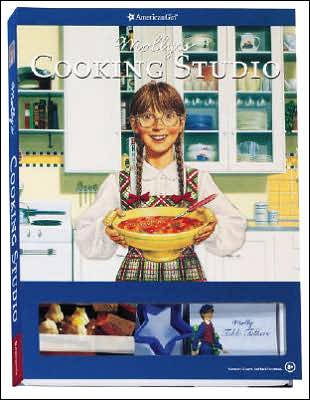
"Molly's Cooking Studio" by American Girl, LLC (American Girl Publishing, 2007)

Everyone's favorite wartime gal is here to share a handful of '40s recipes. Because the book was written for kids, it is easy to understand, and hard-to-handle meats don't dominate the menu. In fact, meat and other items, like butter and sugar, were more uncommon during World War II. "Molly ate less of those foods because they were rationed," the book explains. "We eat less of them today because we know we'll be healthier!"

-- Evelyn Shih

* * *
Volcano potatoes

6 large potatoes
2 tablespoons butter
1 teaspoon salt
¼ teaspoon pepper
½ cup milk
2 egg yolks
Shortening or cooking spray
6 tablespoons grated cheddar cheese
Dash of paprika
Peel the potatoes and cut each potato into 4 pieces. Put potatoes into a saucepan. Add enough cold water to cover them. Turn the heat on high, and bring the water to a boil.

Turn down the heat until the water simmers. Put the lid on the saucepan and cook the potatoes for 20 minutes. Then, insert a fork into a potato piece. If it goes in easily, the potatoes are done.

Place a colander in the sink and pour the hot pan of potatoes into it. Put the potatoes back into the saucepan. Use the electric mixer to beat the potatoes until they are smooth. Add the butter, salt, pepper, milk and egg yolks. Beat the potatoes with an electric mixer until they are light and fluffy.

Preheat oven to 350 degrees. Use paper towels to grease a baking dish with shortening, or coat the dish with cooking spray. Spoon 6 mounds of mashed potatoes, each about 3 inches high, into the baking dish. Use a rubber spatula to shape the potatoes into volcanoes. Use a spoon to make a crater in the top of each volcano. Fill each volcano with a tablespoon of grated cheese. Sprinkle paprika on top.

Bake the volcano potatoes until the cheese melts and browns slightly. Remove the potatoes from the oven. Use a metal spatula to loosen the potatoes carefully from the bottom of the baking dish. Lift them directly onto dinner plates.

Servings: 6.

Copyright © 2007 North Jersey Media Group Inc.
Monday, October 8, 2007

What Would the Dalai Lama Do?

Dalai Lama attains icon status
Sunday, October 7, 2007

By EVELYN SHIH
STAFF WRITER

He has published a steady stream of books on his life and thoughts beginning in the late 1990s. He has photo ops with Richard Gere. He's drawn a crowd of up to 36,000 at the Rutgers University football stadium.

[His Holiness filled Central Park in 2003. Courtesy of northjersey.com.]

Friday through next Sunday, he takes over Radio City Music Hall for five appearances.

He is His Holiness the Dalai Lama, born Lhamo Thondup, the exiled religious and political leader of Tibet and face of Buddhism in the West. The 1989 Nobel Peace Prize winner has become one of the world's most recognizable icons, with his red and yellow robes, shaved head and wizened eyes twinkling behind a pair of glasses.

Not only is he known as an inspirational figure and a leader in behalf of world peace, but, in recent years, he has also become credibly -- or incredibly -- cool. The Dalai Lama's famous face is encroaching on space normally reserved for the iconic likes of Che Guevara and Albert Einstein – and popping up on everything from tote bags to notebooks to boxer shorts.

"I feel like it's a tribute to him as a person," said Kevin McCormick of Princeton, who has designed a Dalai Lama T-shirt available on the Internet. His design riffs off the black and white sharp relief style of the ubiquitous Che shirts by having His Holiness holding two fingers up in the peace sign. "Instead of showing a leader of revolt, I wanted to show someone who I see as a leader of peace. ... With a Che shirt, you can offend a lot of people."

In the media spotlight

McCormick, who is not a Buddhist, created the T-shirt after reading "The Universe in a Single Atom," a book by the Dalai Lama. The 30-year-old may seem an unlikely fanboy for the 72-year-old Tibetan leader, but he's not alone. The 14th Dalai Lama dominated the New York Times bestseller list for several weeks with "The Art of Happiness" (1998), which ended up selling 730,000 copies. The success of books like 2006's "How to See Yourself as You Really Are" continues to prove his popularity, and DVDs like "Ten Questions for the Dalai Lama," coming out Oct. 23, also keep him in the media spotlight.

Although the Dalai Lama is a religious and spiritual beacon, his image seems to cut across the lines of faith and nationality. Where figures like mega-church pastor Joel Osteen might divide the public into believers and non-believers, the Dalai Lama's message is inclusive, said Mara Einstein, author of the new book "The Branding of Faith," which examines the marketing of different religions.

"He is a consistent face of peace in the world," she said. The New Age movement of the '60s and '70s championed Buddhism and Hinduism as alternative world views, and though that movement may have become outdated, said Einstein, the Dalai Lama still carries on his mission of spreading tolerance and non-violence. His reach extends far beyond Tibet, just as the influence of popular Pope John Paul II (an icon who graced T-shirts himself) traveled far beyond the Vatican.

She said that when people wear the Dalai Lama's face across their chests, it's an act of identity creation. "Whether you're wearing a Yankees baseball cap or a Dalai Lama T-shirt, you are communicating to people, 'This is who I am,' " she said.

Inspired individuals like McCormick, who is a freelance Web and T-shirt designer, create their own Dalai Lama merchandise, as do Web sites like "The Zen Shop" at e-sangha.com. The proceeds may not go directly to the Tibetan cause, but the spontaneous proliferation of His Holiness' image indicates its currency.

"Talk about branding," said Einstein. "He's probably got the best brand of any faith. It would be across-the-board positive" to have his image associated with products, people and events, she added.

While there are many people who have done good things in the world and received Nobel Peace Prizes, they "may be less appropriate to put on a T-shirt because they haven't achieved that iconic status that people can relate to just by seeing an image of them," McCormick said.

A further plus: Identifying with the Dalai Lama is something almost completely non-controversial. How could anyone disagree with peace? And unlike most religions, Buddhism has a reputation for being non-proselytizing and open to other faiths, said Einstein. There is less pressure than there may be in other faiths to convert and commit to a whole set of beliefs.

'Ah ha!' moment

But perhaps the real reason the Dalai Lama has such reach in the West is his charisma.

Diane Hatz, a follower of His Holiness for almost 10 years, felt his "unconditional love" from the nosebleed seats of an auditorium where she heard him speak for the first time. It was 1998, and she was on a trip to Washington, D.C. She decided on a whim to see him speak because he is a "historical figure, like Gandhi or Nelson Mandela."

At first she was irritated because she couldn't understand his words through his accent. But her "Ah ha!" moment came when he prostrated himself at the end of the talk in a ceremonial bow.

"He touched his forehead to the floor, and when it hit the floor, it was like this light pierced me in the heart," she said. As soon as she got back home to New York, she began looking for a Tibetan Buddhist spiritual teacher. She eventually ended up with Lama Pema Wangdak at the Palden Sakya Center in New York, where North Jersey Tibetan Buddhists like executive secretary Michele Sakow also practice.

And she will most definitely be at Radio City Music Hall, hanging on his words. Like die-hard sports fans and rock band groupies, Hatz travels to as many of the Dalai Lama's events as she can. She will be going to Indiana and India this year, and Bethlehem, Pa., next July.

"This is what I do," said Hatz. Buddhism informs every part of her life.

Never underestimate the power of an image, she added. "I know people who have only seen his photo and become totally interested in Buddhism," she said.

While most merchandise carrying his image is all in good fun, who knows: Maybe sporting "Dalai Lama Is My Om Boy" on a spaghetti-strap tank top will inspire some epiphanies -- or even enlightenment.

E-mail: shih@northjersey.com
* * *

A Dalai Lama primer
• Ancient lineage: The man known as the Dalai Lama is believed to be the 14th in a line of reincarnations. Tibetans believe that his soul is that of a bodhisattva, or enlightened being. The Dalai Lama has been both the spiritual and political leader of Tibet since the 17th century.
• What's in a name? The Dalai Lama was born Lhamo Thondup in 1935 in Amdo, Tibet. He was recognized as the next Dalai Lama at the age of 2, given the name Tenzin Gyatso and crowned the leader of Tibet at 15.
• Exiled: In 1959, the 14th Dalai Lama was forced to flee to India because of increasingly dangerous pressures from the People's Republic of China. He set up a government in exile in Dharamsala, India.
• Recognition: For his efforts to bridge gaps with other religious and state leaders and his continued dedication to peace, the 14th Dalai Lama was awarded the Nobel Peace Prize in 1989.
• Continued oppression: Last month, laws went into effect in the People's Republic of China mandating that the next reincarnation of the Dalai Lama be chosen by the Chinese government. Observers say this is a transparent attempt to limit the Tibetan leader's influence over his nation. The current Dalai Lama has vowed not to reincarnate in a China-controlled Tibet.
* * *

Other familiar faces
Che Guevara -- Born Ernesto Guevara de la Serna, "Che" became an icon of socialist revolution in South America. His radical Marxist ideas and perceived martyrdom made him a popular symbol in American counterculture -- and a fixture on red T-shirts.
Albert Einstein -- The scientist who theorized relativity and the space-time continuum became America's quintessential mad scientist with his wild hair and crazy tongue flip. He received a Nobel Prize in physics in 1921. Mohandas Gandhi -- A spiritual and political leader of India, Gandhi's name has become synonymous with non-violence. He led civil rights struggles in South Africa and worked for Indian independence from Britain.

Copyright © 2007 North Jersey Media Group Inc.

Sunday, October 7, 2007

Stayin' Alive

Crossing cultures and art forms
Friday, October 5, 2007

By EVELYN SHIH
STAFF WRITER

If you are surprised to hear that there is a Cambodian classical dance version of "The Magic Flute," you wouldn't be the first.
[Scene from Pamina Devi, courtesy of performingarts.ufl.edu]

Sophiline Cheam Shapiro, the choreographer of that work, wasn't sure at first why she had been asked to take on the Mozart opera. Trained in the tradition of Cambodian dance, she and her husband, John, run the Khmer Arts Academy in Long Beach, Calif., and in Cambodia. Peter Sellars, the director of a festival last year in honor of Mozart's 250th birthday, asked her to create a new piece from the original's narrative and theme of magic and transformation.

Shapiro eventually found her own way to tackle the narrative. John Shapiro spoke recently about Cambodian classical dance and the overlap with Viennese opera.

Q. What was Sophiline's entry point into the story of "The Magic Flute"?

Most of her works focus on women, especially women who are victims of other people's foolishness. So she became attracted to the character of Pamina. In the opera, she doesn't appear until the second act. But Sophiline was interested in this character as the victim of these extreme ideologies: the queen of the night as the ultra-feminine, and Sorastro the ultra-masculine. She thought, if you broke this down to a domestic squabble, it would be about much bigger things.

So she made Sorastro Pamina's father, and as it is in the original, the Queen is her mother, and they are fighting over her, but they're ignoring her at the same time. Their battle is really about themselves and has nothing to do with her welfare.

If you look at recent Cambodian history, Sophiline has survived many extraordinary radical regime changes. And all of them come in condemning the regimes of the past. But none of them improved the lives of the people.

So she said, this makes sense in this narrative. It's reflective of my experience of extreme ideology. If it doesn't help the people it's useless.

Q. Where did Cambodian classical dance come from?

The dances were original temple dances as a religious ritual, and then when Cambodia began a Buddhist country, it became a court dance. This was partly because the court was the only institution that could afford it in an agricultural society. ...

When Prince Sihanouk would go on state visits to other countries, he would bring a dance troupe to perform for dignitaries. It was that closely tied with national identity and heritage.

Q. What happened to the art form during the Pol Pot regime?

During the 1970s, an estimated 90 percent of classical dancers and artists died, whether from disease, slaughter or overwork. ... They were symbols of the monarchy, of the past. They were anachronisms. That was the regime's rhetoric: This is entirely new. We're rejecting the old. And if you have even a symbolic connection to the old, we'll kill you.

Afterwards, the 10 percent of dancers who remained struggled to revive the form. The school of fine arts was reopened in 1981, and Sophiline studied there with dancers who had danced in the court.

But the arts in Cambodia have not been able to adjust to new laissez-faire capitalism, adopted in 1990 after a socialist regime. So the arts began to decay again, this time not from slaughter, but through incompetence and lack of leadership. There is no infrastructure for the arts.

What we're trying to do is to create a troupe that can be a model for how the arts can not only survive in Cambodia, but flourish.

Q. What is music like in a classical dance performance?

The ensemble is called a pin peat. It's largely percussive, made of xylophones and gongs and drums, along with a quadruple-reed oboe called the sralai. Four vocalists are also part of our music ensemble. They partly narrate the piece through singing, and they can sing dialogue as well. It's quite limited; you wouldn't get the whole story from listening to them. The narrative is more in the dance itself.

There is a repertory of motifs in classical dance. Ones used for entering, exiting, for flying, for love scenes. These motifs are used in any given piece. Cambodian music is not notated; musicians learn it by memory. Sophiline arranges these motifs for her piece, and then she writes lyrics that are in the traditional meter and rhyming scheme.

Q. It seems like the piece might be a little difficult to understand for non-Cambodian audiences, at least at first.

One of the advantages of doing "The Magic Flute" for Western audiences is that many people are familiar with that story. It opens up the window for a lot of people into this highly stylized and abstract dance form, this music they've never heard before. If you know the story and who the characters are, you're not trying to decipher the story; you're looking at this particular language [as it] tells this story.

E-mail: shih@northjersey.com

Copyright © 2007 North Jersey Media Group Inc.

Thursday, October 4, 2007

Manic for Manga

U.S. bitten by the manga bug
Thursday, October 4, 2007

By EVELYN SHIH
STAFF WRITER

You might say that Buffy the Vampire Slayer and Haruhi Suzumiya are heroines in parallel worlds. Both are chosen souls whose destinies may determine the outcome of the universe. Both are (or begin as) high school students with a lot on their minds, other than saving the world. And neither is shy.

[Haruhi Suzumiya, courtesy of entertainmentearth.com]

But Haruhi, a cosmic anomaly, might be able to alter the space-time continuum by accident. She has eyes that take up a third of her face and a Sailor Moonesque outfit, complete with knee socks. She's a superstar, with her own illustrated books, graphic novels and animated show in Japan.

She's also one of the hottest manga characters in America.

Manga means "comic" in Japanese but has come to stand for Japanese-style comics outside of Japan. U.S. audiences were first introduced to the graphic style through animated cartoons called "anime," which usually take character designs and narratives from manga sources.

But now manga is quickly seeping into the American mainstream, filling shelves at major bookstores like Barnes & Noble and Borders. As the pace of translation into English quickens, closing ground on the Japanese release dates, manga is now a $175 million to $200 million industry in the United States, according to Publisher's Weekly.

And this weekend, fans will gather in strength. The second annual MangaNEXT, the only convention dedicated to manga, will take place in Secaucus at the Crowne Plaza Hotel. Although anime conventions -- which can draw tens of thousands of attendees -- have been around for several years, this is the first celebration in America of the book form, said chairwoman Michelle Berghold of Tinton Falls.

Aspiring mangaka

"American readership for manga right now is heavily female," said Lillian Diaz-Pryzbyl, editor at major manga publishing house Tokyopop, based in California. "A lot of what you see is female authors writing for girls."

Indeed, the base for most of Tokyopop's titles is girls ages 13 and 14, said Diaz-Pryzbyl. In other words, the current core audience for manga in the United States probably doesn't read a word of Japanese -- instead, they are a new generation of readers growing up on a more visual way of reading.

But femininity and teeny-bopper characters are not the defining characteristics of manga in Japan, which can also carry extremely sophisticated, violent or adult material. And like anime before it, manga is maturing as a genre in the United States as a broader range is imported to fans.

"The generation of people who were kids when 'Sailor Moon' and 'Pokemon' were on TV are grown up now," said Diaz-Pryzbyl, referring to two wildly popular anime series launched in 1995 and 1998, respectively. Fans -- who may have watched the shows as Saturday morning cartoons -- are now twentysomethings.

But while these relatively innocent series made waves in America, a darker revolution was beginning. Young adult fans began to discover other, more sophisticated animes like the space bounty-hunting show "Cowboy Bebop" and cyberpunk drama "Armitage III" on Cartoon Network's late-night "Adult Swim" programming.

That was when Keith Cassidy of West Milford started his path toward manga fanhood. "The first time I had what I recognized as anime was on the Sci-Fi channel my junior year of high school," said Cassidy, a student at Stevens Institute of Technology in Hoboken. "It was 'Armitage III,' with voice actors Kiefer Sutherland and Elizabeth Berkley."

Times have changed

Curious to see something that wasn't a live-action drama and not exactly a cartoon, at least not like any he had ever seen, Cassidy looked for more shows like "Armitage III," and in short time stumbled upon mangas. Fast-forward five years: He is now the president of an anime club at his school and the director of operations for MangaNEXT.

Fandom has come a long way since the '90s, said Domenick Santoriello, who, at age 41, is one of the older staff members at MangaNEXT.

"A lot of times, we would get anime tapes from people who took trips to Japan and lived in America, and we would watch it in Japanese," he said. "Or we would take trips to Yaohan [now Mitsuwa Marketplace] in Edgewater, which had a Japanese bookstore, and we would get manga and try our best to translate them."

That's far from the case today. In fact, there are enough aspiring American talents for Tokyopop to run an annual Rising Stars of Manga competition, said Diaz-Pryzbyl. Winners of the contest get their 20-page short manga stories published in an anthology and may get a book deal to develop an OEL -- original English-language -- series.

Right now, as MangaNEXT launches its second annual convention, Tokyopop is entering "round two" of original manga development. Many "Rising Stars" in America are nearing the end of their first book contracts with Tokyopop.

"A lot of the projects I started are now finishing up third volumes, finishing with story arcs," said Diaz-Pryzbyl, who has been with Tokyopop for more than three years. "Now what? We're trying to figure that out."

E-mail: shih@northjersey.com
* * *

What you need to know

• Manga: The Japanese word for comics. Mangas are generally serial stories published by chapter in monthly magazines in Japan. They are usually black and white and printed on low-quality paper. When there are enough chapters, the stories are republished in pocket-sized book format. Unlike U.S. comic books, mangas usually have a defined ending.

The manga industry in Japan took off in the 1970s and is a major genre in publishing there. Osamu Tezuka, the artist generally considered the father of manga, is often quoted as saying he drew inspiration for his style from Walt Disney animation of the 1930s.

For more information, see the new book "Manga: The Complete Guide" by MangaNEXT guest Jason Thompson, out Oct. 9.
• Anime: The Japanese word for animated television shows and movies. The word is a shortening of the English word "animation" but is now generally used to refer to Japanese animation in English.

Often drawing from manga or best-selling novels, anime is a huge platform for entertainment in Japan.

In America, the earliest touchstones were the robot or "mecha" animes such as "Voltron: Defender of the Universe" and "Gundam." In 1988, the manga-inspired movie "Akira" became a cult hit and sparked renewed interest in anime. Since then, anime has become widespread as children's entertainment. "Sailor Moon" (1995) and "Pokemon" (1998) are among the most well-known of the early English-dubbed cartoons.
* * *

WHAT: MangaNEXT convention.
EVENTS: Panels on manga with guests Kensuke Okabayashi, Jason Thompson, Hiroki Otsuka and Mari Morimoto; Artist Alley and Dealers Room for manga art; dance and video programming; manga library and reading room; and cosplay (manga and anime costume) competitions.
WHEN: 2 p.m. Friday to 3 p.m. Sunday.
WHERE: Crowne Plaza Hotel, 2 Harmon Plaza, Secaucus. See manganext.org for more information.
HOW MUCH: $30 at the event.

Copyright © 2007 North Jersey Media Group Inc.

Tuesday, October 2, 2007

Sleuth Sympathy

Detective work on the side
Tuesday, October 2, 2007

By EVELYN SHIH
STAFF WRITER

For Dave White of Saddle Brook, detective work isn't elementary; it's at least in middle school.

The first-time novelist, whose book "When One Man Dies" hits bookstore shelves today, was an avid Sherlock Holmes reader starting in first grade. But as he grew older, the steel trap of Holmes' famous mind became less attractive to him as a crime fiction fan.

"I got less and less interested in the minutiae of clues, and more and more interested in how people act," said White, who -- incidentally -- teaches at Christopher Columbus Middle School in Clifton. "Once you get involved in people, you get involved emotionally."

Unlike Holmes, White's detective Jackson Donne takes things very personally. The new novel begins with the death of Donne's friend, Gerry Figuora, and takes the reader on a roller coaster through Donne's spotted past and onto his shaky road toward the future.

"If you can detach yourself enough to study the mud on somebody's shoe, then murder becomes almost a math problem," said White. "And if you look at Donne, it's definitely not a math problem."

No algorithms could pull Donne out of the hole he partly digs for himself in love and in his professional life. But it's possible that a curious optimism might.

"I think you're pulling for him because he keeps thinking that there's light out there, and that hope gives you hope, as well," said White. "He's trying to get out of a world that's beating him down, and I don't know if he can or not. I want to find that out as a writer."

White developed Donne as a leading character in his short crime stories, many of which were published in magazines and anthologies. Bill Martin, a bitter older detective who becomes Donne's nemesis in the new novel, is a minor character from those stories, as is Gerry Figuora. The Jackson Donne universe is set in New Jersey, mostly near Rutgers University where White majored in English as an undergraduate.

"I'm a Jersey guy, and I think that's important to the field of books," said White. "Jersey people talk differently and act differently than people in Kansas, and I think that's important to get across in the book."

White's next novel will be another Donne book. As this fictional Jersey becomes more and more fully imagined, he has seen characters mature and become voices in their own right.

Case in point: Bill Martin was nothing but a "bit character" until one day when White began revising "When One Man Dies" for publication.

"[Martin's] voice just kind of sprang into my head, and that's when I just started writing from his point of view," said White. The finished book now features alternating chapters of Donne's perspective in the first person and Martin's perspective in limited third person. Their intertwined back stories bring an "interesting twist" to both of their characters, said White.

But even if Jackson Donne has plenty of history with all the wrong people, he's a fairly young gumshoe at a mere 28 years old, one year older than White himself.

"I wanted to take a quintessential detective character and make him younger," said White. "Just to see if that would change anything. Most detectives you read about are middle-aged and pretty jaded."

For Donne, there is still the possibility of starting fresh, of leaving behind the long nights, the violence and the troubled dames. In fact, at the beginning of the novel, he's attempting to enroll at Rutgers.

Maybe solving crimes isn't elementary, and it's done with middle school. Maybe, in the world of Jackson Donne, it's ready to go to college.

E-mail: shih@northjersey.com

Copyright © 2007 North Jersey Media Group Inc.

Good Read not Good Eats (for me)

Wild mushroom ragout
Tuesday, October 2, 2007

Vegetarian recipes from recently released cookbooks:

"Kitchen of Light: New Scandinavian Cooking," by Andreas Viestad (Artisan, 2007)

This is a beautifully executed new book by Norwegian food writer and television host for American Public Television Andreas Viestad. Unfortunately, after reading it, vegetarians may feel a stronger urge to visit Scandinavia than to eat the food. Viestad has filled the pages with personal essays and pictures of the simple, natural life in his homeland. The recipes match that tone in their reliance on the quality of seasonal produce and single-minded approach; some use only two or three ingredients. But the specialty of the region is seafood, and even vegetable dishes may have a hint of goose fat or chicken stock. A handful of recipes, mostly side dishes, will bring vegetarian readers tantalizingly close to the fresh cuisine of Northern Europe. The use of mushrooms like the chanterelle is of particular interest.

-- Evelyn Shih
* * *

Wild mushroom ragout

* 2 tablespoons unsalted butter
* 2 tablespoons finely chopped shallots
* 1 pound mixed wild mushrooms, such as chanterelles, porcini, boletus and hedgehog. Trim, clean and cut into 1/3-inch slices no more than 2 inches long
* 2 teaspoons red wine vinegar
* Fine sea salt and freshly ground black pepper

In a large deep saute pan, heat the butter over medium-high heat. Saute the shallots for 1 to 2 minutes. Add the mushrooms and cook for 5 to 7 minutes, stirring a couple of times. Add the vinegar and cook for 2 more minutes. Season with lots of salt and pepper, sprinkle with parsley and serve.

Variation: Try adding 2 minced garlic cloves, ½ teaspoon chili powder and ½ teaspoon cinnamon for extra flavor.

Servings: 4 to 6.

Copyright © 2007 North Jersey Media Group Inc.