Sunday, October 21, 2007

BOOK REVIEW: Shortcomings

Review: Shortcomings
Sunday, October 21, 2007

By EVELYN SHIH
STAFF WRITER

Reading like a graphic novel version of "The Break-Up," with Jennifer Aniston and Vince Vaughan, "Shortcomings" details the devolution of a San Francisco couple.

I say this only as fair warning. Like the movie, which was marketed as a comedy but turned out to be a sobering look at how love brings out the worst in people, this comic cuts a little close to the bone.

The couple in question, Ben Tanaka and Miko Hayashi, drag their relationship from sea to shining sea, from Berkeley, Calif., to New York City. Along the way, they wrestle with conceptions of race that they project onto themselves and one another. Tanaka is an angry Asian-American male whose self-hatred is almost reminiscent of Woody Allen. He doesn't have enough self-knowledge to curb his tongue, and at first you are tempted to be on Miko's side, but she turns out to have her own hypocrisies.

Tomine takes a slight detour into the love life of Alice Kim, Ben's lesbian friend, who serves as his sounding board for relationship issues. Alice hides her sexual orientation from her traditional Korean parents while going through girlfriends like there's no tomorrow. But though she is just as delusional about herself as Ben and Miko, she brings the voice of reason to Ben at key moments. She's not Margaret Cho -- the comedienne is actually referenced in the story -- but she, too, can tell it like it is.

Some of what Ben and Miko do to each other is truly cringe-worthy, but you feel inexplicably drawn along for the ride. There are breathtaking moments of intimate desperation, as well as confrontation so loud you can hear it jump off the page.

It helps that those pages zoom by with the speed and punch of a good short story. Tomine's black and white art is restrained but carefully, cinematically framed. In a book that tackles race, it helps that he swerves close to realism.

E-mail: shih@northjersey.com

Copyright © 2007 North Jersey Media Group Inc.

Saturday, October 20, 2007

Takcas Earns Coolpoints

Melding word and sound
Friday, October 19, 2007

By EVELYN SHIH
STAFF WRITER

He's won acclaim embodying writer Truman Capote. Can he do Philip Roth, too?

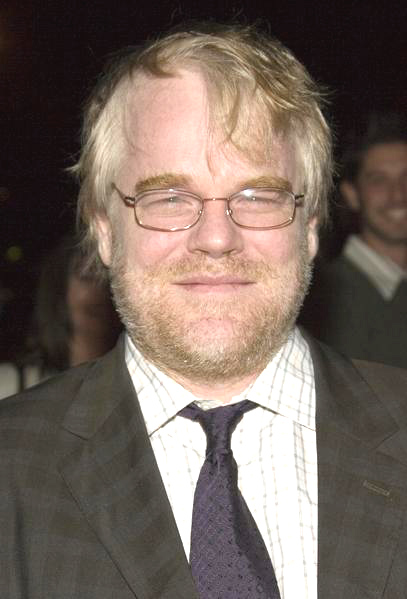
If Roth has anything to do with it, the answer is yes. He personally appointed Philip Seymour Hoffman to read three excerpts from his novel "Everyman" for a concert with the renowned Takacs Quartet at Carnegie Hall. The novel details the bodily decay of the eponymous character and ends with his death.

Edward Dusinberre, first violinist of the quartet and the idea man behind this unusual program, was the one who asked Roth for his druthers.

"It had to be his call, because it was his material," said Dusinberre. "When he suggested Philip Seymour Hoffman, we thought that would be wonderful, and we were just thrilled that he wanted to do it."

Dusinberre spoke about the program, which is split into two acts: the first alternating the minimalist music of Arvo Part and Philip Glass with Roth's prose; the second consisting of Franz Schubert's "Death and the Maiden" quartet with Hoffman's reading of the original poem by Matthias Claudius.

Q. You've said in interviews that you were inspired to do this concert when you read Philip Roth's "Everyman" in the summer of 2006. Where were you at the time?

I was in Santa Barbara, where we have a summer residency at the Music Academy of the West. I was also visiting with my grandmother, who was, at that stage, 103. And she's not at all like the main character in the Philip Roth novel, but of course I was thinking about old age from staying with her.

Q. So we hear Philip Roth is a Takacs Quartet fan?

Yes, it's very nice. He comes to our concerts quite regularly, and I think he's a passionate music lover. He's also kind of curious to see what it'll be like.

Q. Are you a fan of his?

Yes. I've read "American Pastoral" and "The Human Stain." For some reason "Everyman" particularly resonated with me. It's a lyrical book. Although it's written in prose, it has a very poetic feel to it. Very exploratory work, very experimental. That's why it seemed like it might be suitable for a performance like this.
Q. How did you come up with the Arvo Part pieces "Psalom" and "Summa" and the Philip Glass work "String Quartet No. 2" from "Company" as good complements to the Roth excerpts?

I thought it made sense to find music that would be contemporary with Roth. So I started to ferret around and listen to stuff. I was looking for something meditative and not too active, but very atmospheric. Of course, I'm aware of Arvo Part, but I didn't know he had written for quartet. So I was kind of pleased to find that he had. The Philip Glass I knew about because I'm a fan of Samuel Beckett's plays. That piece was originally composed as an incidental theater music for a play by Beckett called "Company." And then he published it separately as a quartet afterwards.

Q. Is this music different from what you usually play?

Often when we're playing we're looking for maximum dramatic contrast, maximum variety, widest emotional spectrum. In these pieces, it's almost like you have to be a little bit more detached and have faith that you can build a sort of atmosphere that's going to be powerful without making too much in the way of action. It's almost a more Zen approach.

Q. Was anything particularly challenging in the music program?

The last piece of the first half of the program is actually quite hard to play because you have to play a lot of these artificial harmonics, which have this clear, glossy sound. Two of us have to tune our strings down to a different pitch in order to do it. ...

When the whole group does it, it creates this eerie, disembodied sound, which is what Part was going for.
CONCERT
WHAT: Takacs Quartet with Philip Seymour Hoffman.
WHEN: 7:30 p.m. Tuesday.
WHERE: Zankel Hall at Carnegie Hall, 57th Street and Seventh Avenue, Manhattan; 212-247-7800 or carnegiehall.org.
HOW MUCH: $50 to $58.
E-mail: shih@northjersey.com

Copyright © 2007 North Jersey Media Group Inc.

Thursday, October 18, 2007

Kiku Show

Cultivating chaotic growth into beautiful order
Thursday, October 18, 2007

By EVELYN SHIH
STAFF WRITER

Mum's not the word at the New York Botanical Garden's new fall show, opening this weekend.

[Head gardener Yukie Shinakura with her flowers. Courtesy of New York Botanical Garden.]

The word is kiku, the Japanese word for chrysanthemums. The exhibit delves into the art of Japanese floriculture, with three traditional styles that date to the samurai age.

The ogiku, or single-stem variety, has one ample blossom atop each 6-foot stem. The kengai, or cascading chrysanthemum, spills down like a waterfall over rocks. The ozukuri, or thousand bloom, looks something like a pot of gold piled high with palm-size flowers.

These aren't your mother's mums.

"If you just leave chrysanthemums in your yard, they flower," said Yukie Kurashina, the head gardener for the show. "But if you want to make it most complicated, you can do that, too."

A long time coming

The exhibit has been five years in the planning. Three years ago, Kurashina traveled to her native Japan to study the art of kiku with Yasuhira Iwashita, the master and chief of the chrysanthemum department at Shinjuku Gyoen National Garden in Tokyo. As a college student in Kyoto, she had dabbled in growing kiku, but the time-consuming art is generally considered a pursuit for elderly masters, she said. While there, Kurashina saw for the first time the Chrysanthemum Exhibit, an annual Tokyo tradition that began in the 1880s. Iwashita currently curates that show and was happy to share his know-how with his new student.

At their nursery in the Bronx, Kurashina and other gardeners on the New York Botanical Garden team have given the exhibit a slightly American cast. They make adjustments for the weather -- this year's August and September have been kind to the plants, she said, but she and her team still have been tricking the plants into early bloom with darkened nurseries and varied temperatures.

They also do their work to rock-and-roll. Gardener Sharita Mason turned off her radio to speak about the plants.

"Our conditions are different from those in Tokyo," she said. "It's American conditions and an American staff."

But nothing in the process is lost in translation.

"They respond to the person who takes care of them, the chrysanthemums," said Mason. "And the person who works on them receives lots of inner gifts, because it's such a discipline. You do days and days of the same task, and you have to be very focused.

"You can see how this tradition was handed down by samurai warriors," she added.

Through a process of pinching off buds, the gardeners encourage the stems to grow longer. They then tie the stems into a certain structure to create neat formations.

This is how a chosen plant grows into a large bushel of tall flowers in the corner of the nursery and then becomes a trained, aesthetically pleasing ozukuri piece, explained Kurashina.

The nursery where the gardeners keep the ozukuri is dominated by traditional boat-like oak containers called sekidai. In each, more than a hundred large blooms -- or just-opening buds -- rest on a black metal rack in a pyramid shape. The gardeners have tied each individual flowering stem to its own little stand, complete with a white wire circle to help hold up the nodding blooms.
Like 'spoiled kids'

A peek below reveals that the entire display is grown from one thick stem. Split into exactly five branches -- three to arch in different directions in the front and two to spread like a fan in the back -- the plant was then allowed to grow straight up in a tall bouquet until the smaller stems were long enough to be bent into shape, said Kurashina.

It sounds torturous, but Mason assured that it isn't.

"We treat the thousand blossoms as spoiled kids," she said. "They've gotten everything they've ever wanted. They've been hand-misted, they've gotten special soil mixes, they listen to classical music when Yukie's here, they get groomed by hand."

"These plants are touched so much," said Kurashina. "Each time we take off buds, or bend them like this, they are touched."

The smaller kengai flowers also receive this treatment. In a different nursery, Kurashina and her assistants had tied what look like smaller, garden-variety mums to sheets of chicken wire. Suspended horizontally, the wire hammocks hold flowers that all grew from single plants.

"The pots are filled with roots," explained Kurashina. The mass of ridged leaves, buds and flowers will be "cascading" down from high perches in the conservatory courtyard -- in the most orderly fashion.

The process of cultivating chaotic growth into ordered shapes takes a different sort of skill than other work at the botanical garden, said Mason, who has gardened for the spring show. Other plants will do just fine with automated watering and fertilizing.

"These are brought up by hand, by feeling, by intuition," she said. "It's sort of an inner communication. You have to be extremely observant, watching them every day, and be in tune with them."

E-mail: shih@northjersey.com

* * *
WHAT TO EXPECT: The main exhibit will be at the conservatory courtyard, just outside the greenhouse with the tropical trees. The chrysanthemums will be in specially erected shelters, called "uwaya," around ponds. The centerpiece will be a bamboo sculpture by ikebana master Tetsunori Kawana.
OTHER FEATURES: In keeping with the Japanese theme, there will be a bonsai tree exhibit, Japanese maples and bamboo, an illustrated exhibition of Japanese plants at the garden's library museum and hands-on activities for adults and kids. Tours, music and dance performances will also be featured.
WHEN: 10 a.m. to 6 p.m. Saturday through Nov. 18. Closed Mondays.
WHERE: New York Botanical Garden, 200th Street and Kazimiroff Boulevard, Bronx. 718-817-8700 or nybg.org.
HOW MUCH: $18, seniors and students $16, children 2 to 12 $5.


Copyright © 2007 North Jersey Media Group Inc.

Tuesday, October 16, 2007

The Big Cheese (Book)

Goat cheese and lentil salad
Tuesday, October 16, 2007

Vegetarian recipes from recently released cookbooks:

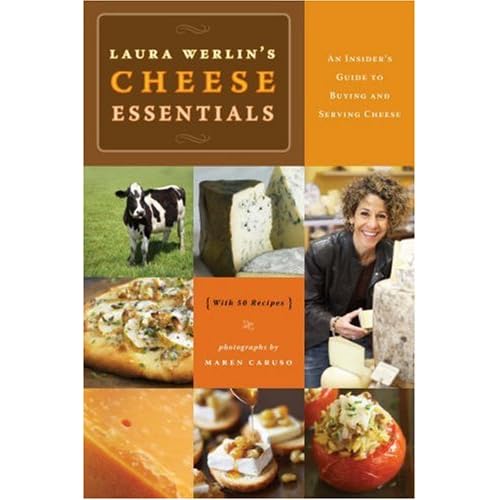
"Laura Werlin's Cheese Essentials," by Laura Werlin (Stewart, Tabori and Chang, 2007)

This is more of a guide to cheese than a cookbook, but if you're a vegetarian and love cheese as a protein and calcium source, you're in luck. Sorry, vegans. From the freshest mozzarella to the strongest Muenster, the world's cheeses are presented in all their smelly glory. Werlin provides a pantry full of charts and helpful tips for choosing, storing and eating.

-- Evelyn Shih


* * *

Goat cheese and lentil salad

* 1 cup dried lentils
* 1 large clove garlic, peeled
* 2 tablespoons plus 2 teaspoons red wine vinegar
* 2 teaspoons balsamic vinegar
* 1½ teaspoons Dijon mustard
* 2 tablespoons chopped fresh dill plus whole sprigs for garnish
* ¼ teaspoon kosher salt
* Freshly ground pepper
* 3 tablespoons plus 2 teaspoons extra-virgin olive oil
* 4 scallions, finely chopped
* 1 medium carrot, peeled and cut into ޭinch dice
* 1 large stalk celery, cut into ޭinch dice
* 1 cup peeled, finely diced English cucumber
* 1 whole Haystack Peak cheese, about 8 ounces (or other soft-ripened goat cheese, preferably with ash)

Fill a 2-quart saucepan about halfway with water. Add the lentils and garlic. Bring to a boil, then reduce the heat to a simmer. Cook, uncovered, for 15 to 20 minutes, then drain. Remove and discard the garlic and let cool.

In a small bowl, whisk together the vinegars, mustard, dill, salt and pepper. Slowly add the oil in a steady stream, whisking constantly to emulsify the dressing. Set aside.

In a medium-sized bowl, mix the lentils with the scallions, carrots, celery and cucumber. Add the dressing and mix gently. Add a little salt, then taste and adjust the seasoning if necessary. Let sit for at least 15 minutes and preferably up to 1 hour at room temperature.

Cut the cheese into eight triangular pieces, about 1 ounce each.

Put about ¼ cup lentils on each of eight salad plates. Lay a piece of cheese on the side of the salad but touching the beans. Garnish each with a dill sprig.

Servings: 8.

Copyright © 2007 North Jersey Media Group Inc.

Tai Chi

Tai chi taps the flow of life energy
Monday, October 15, 2007

By EVELYN SHIH
STAFF WRITER

There were rows of racks and plates stacked in the group exercise room at C.O.R.E. Center of Fitness in Closter. But as it turned out, all the weight we needed for a workout was right in our own bodies.

[Staff photo by Tariq Zehawi. Courtesy of Northjersey.com]

The basic stance of tai chi involves two things. One is a consciously straightened spine. The other is a stance that lives in the limbo between a squat and a standing position, feet at shoulder width.

After 30 seconds, I learned, this "wuji" posture also involves a distinct burn. My untrained thigh muscles were shuddering involuntarily by the end of the 15-minute warm-up, and I was wiping sweat off my brow. So far, not a bad workout for a martial art form that is known for being popular among the octogenarian set in China.

"It looks so easy, but when you do it, it's hard," said instructor Lipeng Zhang. Unlike karate, tae kwon do, and other aggressive martial arts used in combat, tai chi was created hundreds of years ago in China as a method of maintaining health and attaining longevity. Done properly, it is an excellent way of fostering core balance, leg strength and organ health. But doing it right requires patience, explained Zhang.

Standing still in the wuji posture -- for what felt like a long time to me -- was the first thing we did in the warm-up portion of our hour-long lesson. Then in a moving meditation, we began shifting our weight out of the posture, legs still bent, and moving our arms in time with the motion.

Mental image

Following along, I thought that the movements were in keeping with my mental image of tai chi: it was as if we were moving invisible jugs from right to left, then left to right in a languid oscillation. But now I knew that I was supposed to be feeling the qi, or life energy, move between my hands.

Zhang usually leaves the discussion of qi for more advanced students, but tai chi instructor Arcady Dudko, who teaches at Callanetics and Pilates Studio in Tenafly, likes to incorporate it in his teaching.

"When you relax, it encourages natural life force, or qi, to flow through your body naturally," he explained. "Modern science has shown that there is great benefit in this bio-electrical energy flowing well.

"The easiest way to feel it is in your fingers," added Dudko, who repeatedly exhorted us to feel the "tingle" in our fingers during his lesson.

Like other martial arts, tai chi consists of different "forms," or sequences of moves that can be learned and memorized. This poses certain difficulties for an instructor teaching students at different levels.

After the warm-up, both Dudko and Zhang asked more experienced students to run through forms on their own for practice while teaching moves piecemeal to newer students. If the new students are game as I was, Dudko has them to follow along for the first and simplest sequence before splitting the groups.

Both instructors would keep an eye on the experienced students even while teaching the new students, watching for mistakes or slips in technique. When the newbies got the trick and began committing the new move to memory, the instructor would give notes to the experienced group or teach a new sequence. If you're thinking that this sounds like a long-term time commitment, you'd be right. Zhang estimates that he spends about a year teaching a novice the basics and the first form.

Increased energy

But the health benefits kick in after a few lessons. One student in Montclair, where Zhang teaches another class, said that he found himself walking up stairs effortlessly after a month. Most students also report more mental clarity and increased energy, said Zhang.

It's easy to forget the outside world because the entire tai chi experience is a mental exercise in concentrating on your body in a new way, said Dudko.

"You're developing [your] neurological system, as well as [your] cardiovascular system, because you are working with gravity and natural forces that are around you all the time," he explained.

Speaking of gravity: Can I stand up straight now? I was given permission at the end of the lesson, and did, to my great relief. According to Dudko, I had done the most basic and most natural type of weight training, simply by holding myself up.

"If you do weight lifting, you are applying particular strain on one part of the body," he said. "With tai chi you work with gravity as opposed to forcing yourself to lift heavy things."

****************
What to expect

You should wear: loose, comfortable exercise clothing that allows maximum flexibility; supportive shoes.
Class contents: Hour-long lessons generally begin with a 15-minute slow meditation and warm-up, followed by individual practice of excerpts from the longer sequence of movements called forms. More experienced students may run through full forms, and beginners continue practicing the movement of the day. Equipment used: Bring a water bottle and an open mind.
Muscles/body parts worked: heavy emphasis on legwork, core balance and overall coordination. At higher levels, qi (life energy) flow to internal organs improves, according to instructors.
For best results: Speak with your instructor beforehand if you need to learn the basics. Most classes have a core of long-term students but welcome beginners.
Availability:
• Callanetics and Pilates Studio: 9:30 a.m. Sundays, 10 Jay St., Suite 6, Tenafly. For more information, call 201-251-4500 or see njpilates.com.
• Lipeng Zhang: 9 p.m. Thursdays at the Lutheran Church, 153 Park St., Montclair. 12:30 p.m. Saturdays at C.O.R.E. Center of Fitness, 91 Ruckman Road, Closter. For more information, call 862-220-1382 or see americaneuropeanshaolin
.com.


E-mail: shih@northjersey.com

Copyright © 2007 North Jersey Media Group Inc.

Friday, October 12, 2007

Axis of Non-Evil

Tour uses humor to fight racism
Friday, October 12, 2007

By EVELYN SHIH
STAFF WRITER

When comedian Dean Obeidallah was in grade school, he brought something very special in for show and tell.

It was his father.

[Dean Obeidallah, courtesy of iconconcerts.]

"My teacher had me bring in my dad to show the kids an Arab man," he said.

Half Italian and half Palestinian, Obeidallah had an interesting childhood in Lodi and Paramus. It's now the focus of his act as one of the comedians in the Axis of Evil Tour, coming to the Nokia Theatre in Manhattan on Saturday.

His upbringing brought together seemingly clashing elements that bred natural comedy. Obeidallah grew up going to Catholic school on a strict no-pork diet -- in keeping with Muslim traditions. When his father went to Mass with him and his mother one Sunday, he had this to say about the Communion wafer: "It needs salt."

But his Arab background wasn't always the meat of his routine, said Obeidallah.

"After 9/11, I actually got more in touch with my heritage from defending it to people all the time," he said. "The only way I could comment at the time was through comedy.


IF YOU GO
--------------------------------------------------------------------------------

WHAT: Axis of Evil Comedy Tour.

WHERE: Nokia Theatre, 1515
Broadway, Manhattan; 212-930-1959 or nokiatheatrenyc.com.

WHEN: 7 and 11
p.m. Saturday.

HOW MUCH: $36.50, $46.50 and $51.50.


"If Italians needed help, I would be doing more of that," he added.

In a way, he was back to doing show and tell -- this time telling the ethnically non-Arab world about what it was really like to be Arab-American -- and this time, he was a man with a mission.

Obeidallah co-founded the New York Arab American Comedy Festival in 2003 with Cliffside Park comedian Maysoon Zayid to "do something for the community." In part, it was to encourage Arab-Americans in the entertainment industry. But it was also something of a public relations effort, educating mainstream America about the Middle Easterners who weren't, contrary to conventional wisdom, evil.

"We did nothing," said Obeidallah. "But our world has changed so much."

The name "Axis of Evil" was coined about three years ago when he began touring with Iranian Maz Jobrani, Palestinian-Mormon Aron Kader and Egyptian Ahmed Ahmed. "The use of the name was really to mock the idea," explained Obeidallah. "We're not inherently evil people. And now we're using comedy, truly an American medium, to make our point."

After getting picked up for a special by Comedy Central earlier this year, the Axis of Evil comedians had a higher profile than ever. "The Watch List," a Web-only series of bits by Middle Eastern-American comedians, also helped bring attention to the tour.

It's the right time for Middle Eastern comedy, said Obeidallah, who has been told by friends and industry experts not to focus on his heritage. "I think that enough time has passed since 9/11," he said. "People are still flooded with negative portrayals of Middle Eastern people. But there came a point when people began to be intrigued about real Middle Easterners."

When the tour began three to four years ago, 95 percent of the audience was Middle Eastern-American, he added. Now, the ratio is more like 60-to-40 or even 50-50 for Middle Easterners versus other Americans.

"This is the first time ever that a major New York theater will be headlined by Middle Eastern comedians," said Obeidallah. Zayid, who is of Palestinian ancestry, will be a special guest.

"It's not a seminar or Arab 101," he added. "But if you're listening, you may learn new things."

E-mail: shih@northjersey.com

Copyright © 2007 North Jersey Media Group Inc.

Thursday, October 11, 2007

From Carrots to Kimchi

East meshes with West in North Jersey markets
Thursday, October 11, 2007

By EVELYN SHIH
STAFF WRITER

Walk in the door, and you will see familiar fruit like apples and oranges in a large, wood-slatted produce display. But in the neighboring tub, you see long, thin tubers labeled "gobou roots" with the dirt still clinging to their brown skins.

[Left: Staff photo from Han Ah Reum by Peter Monsees. Courtesy of North Jersey Media Group.]

What are gobou roots? And where are we?

The roots are actually burdock, used commonly in Japanese cuisine -- but we're not in Japan. Welcome to Bergen County's Korean supermarkets.

For home cooks who cook in the East Asian style -- Korean, Chinese or Japanese -- these markets are a boon, saving a trip to Chinatown or Queens. Produce generally unavailable at a local supermarket chain like bok choy, daikon and lotus roots are prominently displayed and sold at manageable prices.

But on shelves next to the bountiful tofu section, Oscar Mayer and Kraft Singles make their residence. Kraft's Philadelphia cream cheese, bacon, hot dogs and even Lunchables can be found next to more exotic merchandise. In dried food aisles, you might even find a section dedicated to Goya and pick up a jar of Skippy.

"We are not just for Koreans," said Jimmy Kim, spokesman for the Han Ah Reum supermarket. "We are a neighborhood market ... a lot of Western, Chinese and Japanese people visit us."

More than other East Asian markets, Korean supermarkets in Bergen County are one-stop shopping centers for all sorts of food commodities -- Eastern, Western and beyond. An island of tubers at Han Yang Korean Market in Bergenfield features malanga, popular in Cuba; taro root, important in West Africa, the Caribbean and the Polynesian Islands; and cassava, which is used to make tapioca. And that's in addition to your garden-variety red potatoes going for 79 cents a pound.

Han Ah Reum, or H-mart as it is now called, is based in Lyndhurst and has three franchise stores in North Jersey. The first, in Englewood, began as a small community grocery in 1992 and caters mainly to Koreans. It was followed by larger supermarkets in Little Ferry and Ridgefield in 1999. The Little Ferry store tends to have more Western products, while the Ridgefield establishment carries more specialized Korean fare, said Kim.

All this variety makes for a diverse shopping crowd at any given time of day. The newspapers and homemade fliers at the entrance may be in Korean, but the sheer breadth and quantity of produce could fuel countless international cuisines, not to mention the good old-fashioned American meal. Produce is commonly labeled in Korean and English, with Chinese added for good measure: Chinese customers are second in numbers only to Koreans, said Kim.

No matter what kind of customer you are, there's a good chance you'll find what you're looking for. Run-of-the-mill string beans are next to mounds of fava and cranberry beans. Four kinds of bok choy are there for the choosing: regular, baby, Shanghai and Taiwanese. You can get either Swiss or Korean chard, and you can even get your hands on collard greens for 99 cents a pound.

Meat and seafood selections also span the world. Whether you are looking for a pig's shank, ears or blood, the shelves are stocked. Cornish hens ($1.99 per pound) and whole rabbits ($2.49 per pound) also are in ready supply. Fish, such as yellow croakers, are generally sold whole -- even fresh -- from the aquarium. Two tanks of blue crabs were seen, alive and scrabbling, at $2.99 per pound.

These, of course, are on top of specialized Korean items that shoppers say are hard to find anywhere else. Asian pears, which look like olive-colored apples, are a popular fruit and gift item for the current harvest season, said Kim. At holidays like the Lunar New Year and Chusok, which will be celebrated this weekend at Overpeck Park in Leonia, rice cakes called "dduk" are key ingredients -- and they are prominently displayed in stores this month for that reason. Flour for Korean pancakes called "pajun" and batter for tempura-like fried "chun" also are on sale.

And if you know anything about Korean food, you know that the pickled vegetables called kimchi are a defining characteristic of any meal. "If I go a week without it, I start missing it," said Jonathon Kim, a Fort Lee resident and one of the organizers of the Leonia Chusok celebration. Luckily for him, H-mart makes fresh kimchi every weekend -- 19 varieties -- at the Ridgefield store.

This is a boon even for Korean home cooks who know how to make their own kimchi, said Andy Kim, 49, of Tenafly. His wife spends "at least 12 hours" rubbing and flavoring the cabbage.

For those of us less in the know, visiting a Korean market is an easy way to get a taste of the cuisine without too much of a kitchen adventure.

E-mail: shih@northjersey.com

* * *
Locations
Where to find Korean supermarkets:
• Han Ah Reum: 260 Bergen Turnpike, Little Ferry (201-814-0400); 321 Broad Ave., Ridgefield (201-943-9600); 25 Lafayette Ave., Englewood (201-871-8822).
• Han Yang Korean Market: 433 South Washington Ave., Bergenfield (201-384-8288).

* * *
Harvest party
A celebration of Chusok, the Korean harvest festival, will take place Saturday and Sunday at Overpeck Park in Leonia starting at 11 a.m. each day. The Korean-American Association of New Jersey is hosting this statewide bash that will include food, performances of traditional dance, fireworks, a soccer match, a kite-flying competition and more. Admission is free.

Copyright © 2007 North Jersey Media Group Inc.